

Advice after your nerve block for surgery
On this page…
Nosebleeds are common because the nose has an excellent blood supply. Nosebleeds can occur spontaneously or after an injury, infection, or irritation. Other factors such as your nose anatomy, blood thinning medications, clotting problems or high blood pressure can affect the severity and duration of the bleeding.
If your nose is actively bleeding
Apply the following first aid:
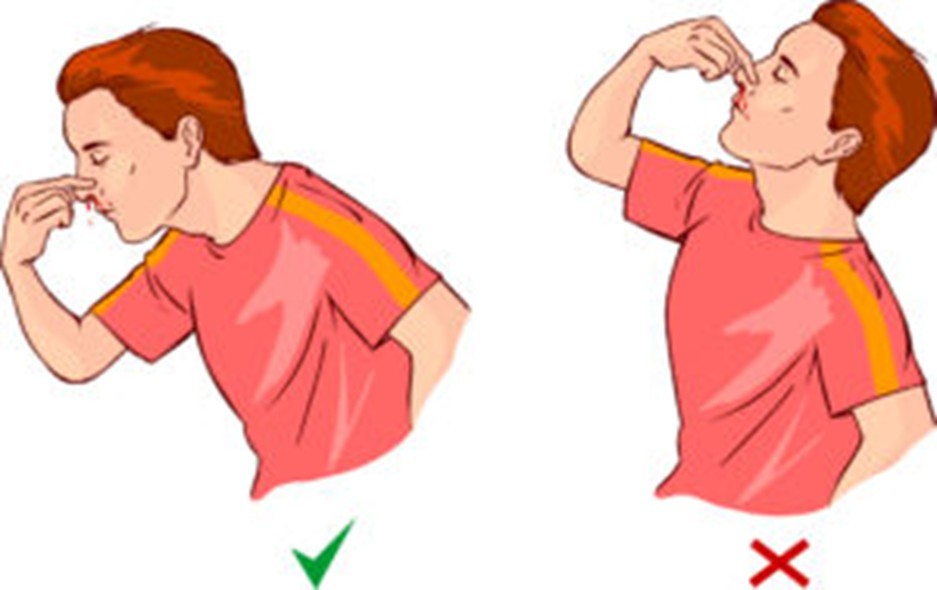
- Pinch the lower, soft tip part of your nose (not the top bony hard area).
- Put your chin on your chest so blood does not run backwards into your throat.
- Continue applying pressure for 15 minutes without letting go.
- Sucking on an ice-cube or applying a bag of frozen peas wrapped in a tea-towel to your forehead or the back of your neck can help slow bleeding.
- If the bleeding does not stop after 30 minutes, call an ambulance, or go to the nearest Emergency Department.
If your nose has stopped bleeding,
Avoid:
- heavy lifting or straining
- blowing your nose heavily
- picking your nose or dislodging any scabs/clots
- high temperatures such as hot drinks, hot baths/showers
Treatment
- A saline nasal wash such as Sterimar ® or Neilmed ® sinus rinse can be beneficial to clean old clots from the nose.
- Take plenty of liquid and modify your diet to avoid constipation.
- Your doctor may have given you a nasal cream or ointment to treat your nose bleed. Naseptin cream is the first line choice but, if you are allergic to nuts, then Mupirocin may be substituted. These should be applied to your nose without irritating the inside lining of your nose (septum).
How to apply the nasal cream/ointment
- Apply a pea-sized amount of the cream/ointment to your finger.
- Close one nostril and bring your finger with the cream up to the other nostril.
- Inhale the cream into the front of the nose.
- Massage the outside of the nostril to work it into your nose.
- Wipe off any excess gently with a tissue.
- You should then repeat this on the other side.
- This can be done 2-3 times per day for 2 weeks, if advised by your doctor.
- Naseptin should rarely be given for longer than a 2-week course, unless under strict instructions from your doctor.
- Applying petroleum jelly (e.g., Vaseline) to the front of the nose can also help and is safer to take longer-term, along with a saline rinse.
If the bleeding continues...
after first aid measures are applied, nasal cauterisation may be necessary
The doctor may have applied silver nitrate (chemical) or bipolar (heat) cautery to seal the vessels in your nose. You may get a bit of spotting of blood even after this, or mucus discharge. This is normal and may take a few days to settle down. You may have been given a saline spray and/or nasal cream to take for the next few weeks (see above).
Cautery under local anaesthetic is rarely painful but if you have some discomfort once the numbing agent wears off, you may take some simple painkillers such as paracetamol or ibuprofen to relieve pain (if you have not been told you should not take them).
If you have any further concerns, seek advice from your GP, Call NHS 111 or visit https:/
Contact us
If you have any queries relating to this information, please contact the Emergency department (ED) service.
About this information
Service:
Emergency department (ED)
Reference:
A/013
Approval date:
1 November 2024
Review date:
1 November 2027
Click ‘show accessibility tools’ at the bottom of the page

Then click ‘select language’

Alternative formats
You can use the accessibility toolbar at the bottom of your screen to:
-
Change the text size
-
Adjust the font
-
Modify the colour contrast
-
Use the translate function
If you would like this information in another format, such as Braille, audio, or easy read, please speak to a member of staff.
You can also print as well as download as PDF using the “Print this page” button at the end of the page.
Staff will print a copy for you on request
Important note
This page provides general information only. It is developed by clinical staff and is reviewed regularly every 3 years for accuracy. For personal advice about your health, or if you have any concerns, please speak to your doctor.