

Advice after your nerve block for surgery
On this page…
Introduction
Tears from your eyes normally continuously drain via your upper and lower eyelid into a tear sac and from there into your nose.
If you have a blockage of the tear drainage system this causes tears to run down onto your cheek and can lead to recurring infection in the tear sac.
The blockage is usually at the point where the tears drain into the nose and your eye doctor can get a good idea of this by probing and syringing the tear ducts.
The DCR operation reopens the tear drainage into the nose. This can be done by the eye surgeons in an open operation through a cut on the cheek just next to the eye. Or it can be done via keyhole surgery, where endoscopes guide instruments up into the nose to meet a probe passed through the tear duct.
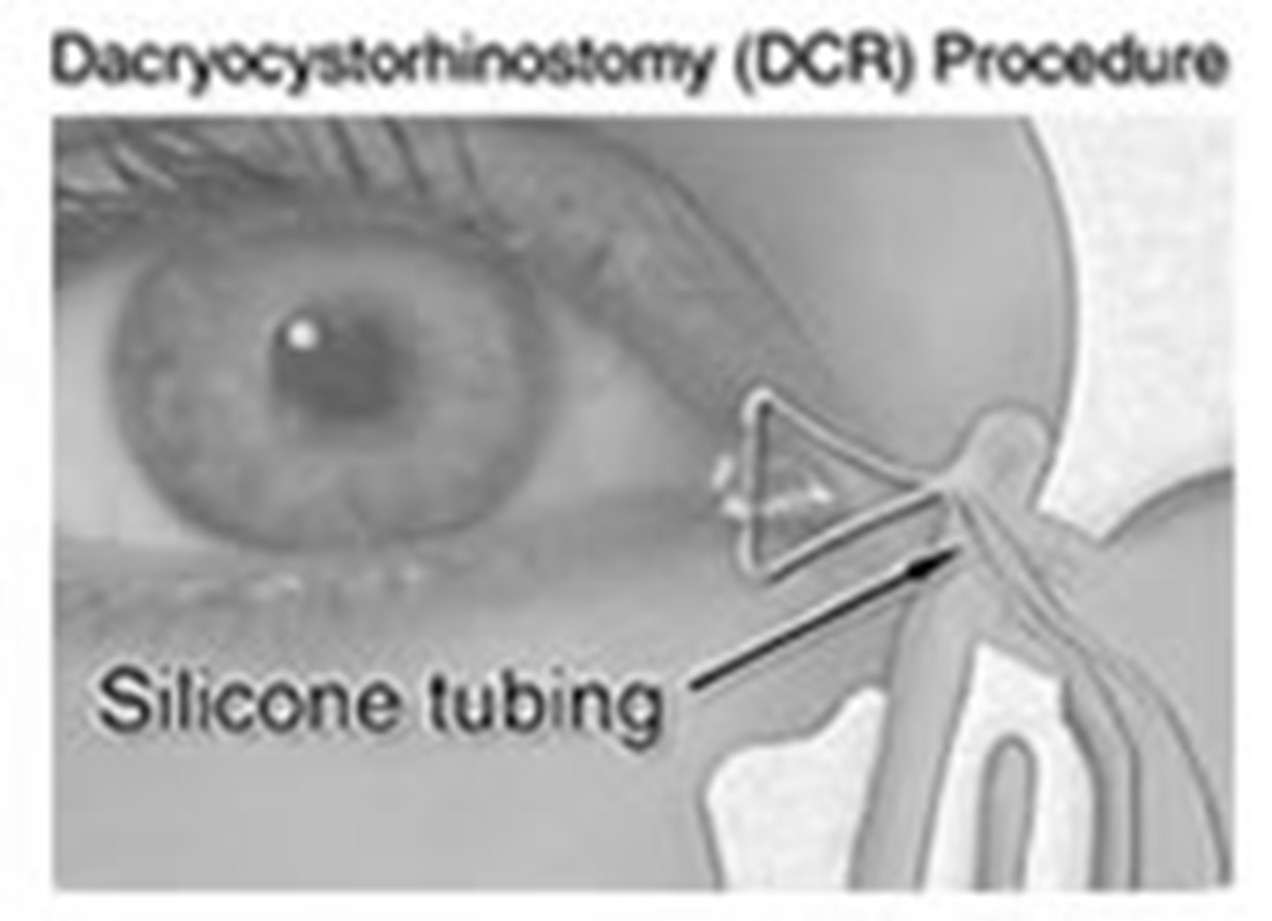
With both techniques a wide opening is made between the nose and the tear sac. Finally fine silicone tubing is passed through the tear ducts in the upper and lower eyelids in the nasal corner of the eye and knotted in the nose. This tubing is left in position for two to three months.
About the Operation:
You will normally be admitted to hospital on the day of the surgery.
The operation is usually carried out under a general anaesthetic (fast asleep) and takes around one hour. The operation is done with endoscopes through the nostrils so there is no incision or cut on the outside, nor should there be any change in the appearance of the nose after the surgery.
At the end of the operation small packs are sometimes put into the nose. This of course makes breathing very difficult when you wake up and you have to remember to breathe through your mouth!
The packs are normally removed two to three hours after the surgery in order to give you a more comfortable night. In some cases they are left in until the following day. You normally remain in hospital overnight and are ready for discharge home the next day.
What to expect afterwards:
For the first week or so after the surgery you will feel quite blocked up and congested. This is quite normal and occurs because of the swelling inside the nose. It is also likely that you will have some swelling and bruising around the corner of your eye. Some surgeons will prescribe nose drops, eye drops and possibly decongestants for you to use afterwards.
It is important to remember that about three or four days after the surgery you will still feel uncomfortable. Your face may be painful, your eyes will hurt and you will have headaches. You may even feel as if you have caught a cold or are developing flu. This normally lasts two or three days and once you are through this stage things should steadily improve.
Please arrange to have 7- 10 days off of work after this surgery (a medical certificate can be organised for you). The first follow up visit is normally about two weeks following the surgery, although if you are having particular problems you should make contact and we will review you sooner.
The second visit is about two to three months following the surgery and at this point the fine silicone tubing left in the tear ducts and knotted in the nose will be removed. This is done in out patients with a local anaesthetic spray and usually only cause minimal discomfort. It is normally at this time that things should be close to having completely settled.
Risks:
As with all forms of surgery, there are risks of both bleeding, which may require the nasal packs to be put back in, or possibly infection, which may require some antibiotics. An infection can be recognised by redness and swelling of the eye, or a most unpleasant green nasal discharge and feeling hot and flushed.
Specific to this surgery, as the operation is close to the eye, damage can sometimes occur to the thin bones that separate the orbit (eye socket) from the nose. If this is broken a black eye can result. This normally disappears over a dew days. It is important not to blow your nose vigorously for a week until this has healed. Also if you need to sneeze, do not try to suppress this but rather sneeze with your mouth open.
The operation successfully helps settle the watery eye in about 80% of patients. Failure to stop the watering can sometimes mean further surgery is necessary.
ENDOSCOPIC DACROCYSTORHINOSTOMY (DCR)
Any Questions?
The team involved in your care have written this information booklet to make your admission as smooth as possible. However, it does not cover every aspect of your care and the staff will always be happy to answer any other questions or points of concern.
If any of these problems arise after you have gone home please contact the wards:
Frimley Park Hospital:
Short Stay Surgery ward Direct No: 0300 613 3216
F1 (children’s ward) 0300 613 4252
Sources of Additional Information:
British Association of Otorhinolaryngologists: www.
National Institute for Health and Clinical Excellence (NICE) : www.
Contact details:
Frimley Park hospital
Generic ENT Secretaries Frimley: 0300 614 5000 - fhft.ENTClinicalAdminFPH@
Wexham Park Hospital
Generic ENT Secretaries Wexham: 0300 614 5000
Contact us
If you have any queries relating to this information, please contact the Ear or nose and throat (ENT) service.
About this information
Service:
Ear, nose and throat (ENT)
Reference:
G/009
Approval date:
23 February 2026
Review date:
1 February 2029
Click ‘show accessibility tools’ at the bottom of the page

Then click ‘select language’

Alternative formats
You can use the accessibility toolbar at the bottom of your screen to:
-
Change the text size
-
Adjust the font
-
Modify the colour contrast
-
Use the translate function
If you would like this information in another format, such as Braille, audio, or easy read, please speak to a member of staff.
You can also print as well as download as PDF using the “Print this page” button at the end of the page.
Staff will print a copy for you on request
Important note
This page provides general information only. It is developed by clinical staff and is reviewed regularly every 3 years for accuracy. For personal advice about your health, or if you have any concerns, please speak to your doctor.