

Advice after your nerve block for surgery
On this page…
Getting into a wheelchair independently
- Push the wheelchair up against a wall or solid piece of furniture.
- Put on the brakes and swing the footrests out of the way.
- You can then transfer yourself into the wheelchair.
- Once seated, push the footplates down and rest your feet on them in front of the heel loops.
Getting out of a wheelchair independently
- Put on the brakes and push the footplates up.
- With one hand on each armrest, bend forward slightly to bring the body weight to the front of the seat. Put both feet firmly on the ground, with one foot well back, and push up into the upright position.
WARNING: When standing, do not place your feet on the footplates or the wheelchair will tip up.
Using a wheelchair outside
- Keep clothes, rugs, covers clear of the wheels.
- Only use the chair on a hard level surface; the wheels will sink into soft ground and the user may be unable to move the chair without help.
- Most pavements slope slightly towards the kerb and the wheelchair may have a tendency to pull towards the road.
- The occupant should wear a properly fitted safety belt.
- Avoid putting heavy loads on the back of a wheelchair. This could cause the wheelchair to tip over backwards.
- Don’t pull back on doors or other objects when sitting in a manual wheelchair as they may release, causing the chair to tip.
Pushing a wheelchair
The occupant can usually tell the pusher how the wheelchair operates.
What to do when pushing a wheelchair
- Put the brakes on to steady the chair and swing the footrests out of the way before the occupant gets in and out.
- Make sure that clothes, rugs, covers, etc. do not catch in the wheels.
- Tell the occupant before changing position, tipping the chair or altering the speed.
- Pay attention to the ground surface and avoid uneven ground when possible.
- When stopping, position the wheelchair so that the occupant can see and communicate as well as possible.
- Lift the wheelchair by its frame.
Don’t do this when pushing a wheelchair
- Rush the occupant during transferring or by walking too quickly.
- Jolt or jar the wheelchair.
- Rock the wheelchair like a pram.
- Lift the wheelchair by the armrests or footrests.
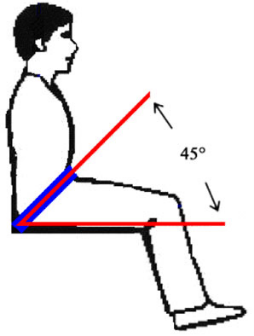
Correct belt positioning
- Occupant sitting in or near 90° sitting position.
- Posture/safety belt fixed near to corner of the seat/base with belt at approximately 45° to the seat base with a snug fit over the pelvis.
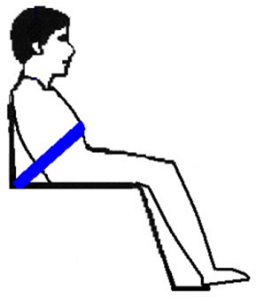
Incorrect belt positioning
- Belt positioned above the pelvis against soft tissue area of lower abdomen. The hips are forward in the seat giving a reclined posture.
- The belt will not generally stop the person slipping further down in the seat. Incorrect position can be caused by: the occupant being unable to attain a 90° sitting position; the occupant slipping down in the seat due to inappropriate fitting/adjustment; or the belt being held away from the occupant by a part of the seat system (e.g., belt over top of armrests or over hip/thoracic supports).
Contact us
If you have any queries relating to this information, please contact the Occupational therapy service.
About this information
Service:
Occupational therapy
Reference:
UU/077
Approval date:
23 June 2025
Review date:
23 June 2028
Click ‘show accessibility tools’ at the bottom of the page

Then click ‘select language’

Alternative formats
You can use the accessibility toolbar at the bottom of your screen to:
-
Change the text size
-
Adjust the font
-
Modify the colour contrast
-
Use the translate function
If you would like this information in another format, such as Braille, audio, or easy read, please speak to a member of staff.
You can also print as well as download as PDF using the “Print this page” button at the end of the page.
Staff will print a copy for you on request
Important note
This page provides general information only. It is developed by clinical staff and is reviewed regularly every 3 years for accuracy. For personal advice about your health, or if you have any concerns, please speak to your doctor.