

Advice after your nerve block for surgery
On this page…
Standard rotator cuff repair exercises
|
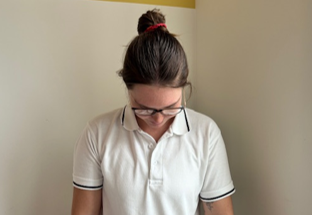
1. Cervical Range of Movement Sit or stand tall with relaxed shoulders. Gently move your head in each direction: look up, look down, turn to the right, turn to the left, tilt your ear towards your shoulder on each side 10 reps x3 a day |
 |
|
2. Scapula retraction sitting Sit upright with your shoulders relaxed. Gently squeeze your shoulder blades back and down, as if you’re tucking them into your back pockets. Hold for a few seconds, then slowly relax and repeat. 10 reps x3 a day |
 |
|
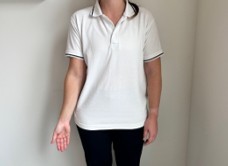
3. Active elbow flexion Stand with your arm by your side. Slowly bend your elbow, bringing your hand towards your shoulder. Then straighten the arm back down with control and repeat. 10 reps x3 a day |
 |
|
4. Wrist movement Rest your forearm on a table with your hand hanging over the edge. Gently lift your hand up towards the ceiling, then return to the start. Next, lower your hand towards the floor, then return to the start. Repeat both movements. 10 reps x3 a day |
 |
|
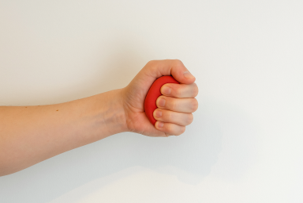
5. Ball squeeze Sit with your hand around a soft foam ball. Gently squeeze the ball by bending your fingers, then relax. 10 reps x3 a day |
 |
|
6. Supported shoulder outward rotation Stand tall with your arm by your side and elbow bent at a right angle, resting your forearm against your stomach. Use your other hand to gently guide your forearm outwards until your fingers point forward. Return slowly to the starting position and repeat. 10 reps x3 a day |
 |
Contact us
If you have any queries relating to this information, please contact the Physiotherapy service.
About this information
Service:
Physiotherapy
Reference:
BB/074
Approval date:
30 April 2026
Review date:
1 April 2029
Click ‘show accessibility tools’ at the bottom of the page

Then click ‘select language’

Alternative formats
You can use the accessibility toolbar at the bottom of your screen to:
-
Change the text size
-
Adjust the font
-
Modify the colour contrast
-
Use the translate function
If you would like this information in another format, such as Braille, audio, or easy read, please speak to a member of staff.
You can also print as well as download as PDF using the “Print this page” button at the end of the page.
Staff will print a copy for you on request
Important note
This page provides general information only. It is developed by clinical staff and is reviewed regularly every 3 years for accuracy. For personal advice about your health, or if you have any concerns, please speak to your doctor.