

Advice after your nerve block for surgery
On this page…
Introduction
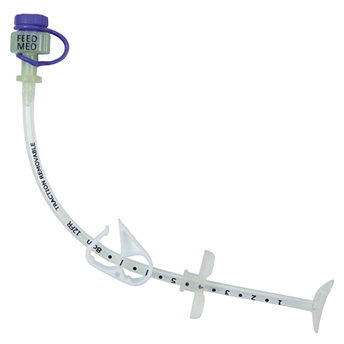
The Monarch Capsule enteral tube is a feeding tube which goes directly into the stomach. These tubes are used to help people with feeding difficulties meet their nutritional needs.
The tube enters your body through a stoma site into your stomach or small intestine.
As with all enteral tubes it is important that you seek advice if you experience any of the following:
- Increasing pain when using the tube
- Bleeding around the site
- Leakage of feed or gastric content from the site
- The site is swollen and/or has pus oozing
If you experience any of these please contact your local Enteral Nutrition Clinical Nurse Specialist.
Daily care of the tube and skin
You will need to allow some time each day to care for your feeding tube and the stoma area where it enters your stomach.
- Always wash and dry your hands thoroughly before and after you carry out any activity involving the tube.
- The area around the tube should be cleaned with water and dried thoroughly.
- The external retention bar should be retracted approximately 3 cm from the skin prior to advancing the tube further into the stomach. The tube should then be rotated through 360° and gently withdrawn until resistance is felt. The external retention bar should subsequently be repositioned against the skin, ensuring it is secure but not excessively tight.
Insertion and removal of the Monarch Capsule
This device is a traction removable device and does not require any other additional device to remove it.
Routine replacements are required every 9-12 months, however should your tube begin to look worn or the end connectors fail, please contact your Enteral Nutrition CNS.
What can be administered through your tube?
- Only liquids should be administered through your tube. Administration of any other substances may result in blockage of the tube. If a blockage cannot be cleared, the tube may need to be replaced.
- Your feed and water requirements will be determined by your dietitian, who will provide you with an individualised feeding regimen. This will include the prescribed volumes and the rate at which they should be administered.
- MEDICATION can be given through the gastrostomy if no other route is available. Drugs should ideally be in liquid or dispersible form. Some tablets may be crushed, please discuss this with your doctor or Enteral nutrition nurse. The gastrostomy tube must be flushed before, after and in between any medications. some liquid medications can be sticky and may need diluting to avoid tube blockage—please discuss with your doctor or pharmacist.
Flushing
Regular flushing of your tube is important to prevent it from blocking. Use drinking water to flush, at least 30-50mls in a 60ml syringe.
Flushing is recommended:
- Before and after each feed.
- Before, after and in between each medication.
- Once a day if the tube is not in use.
If the tube gets blocked
This should not happen if the tube is always flushed as instructed.
However, should the tube become blocked:
- First draw back tube contents to remove blockage
- Try to flush the tube with warm water (not hot). Use 60 ml enteral syrige.
- Use the syringe plunger to apply gentle pressure to withdraw contents of the tube, try a push/pull action
- Gently squeeze/roll blocked section of tube between finger and thumb to help disperse the blockage
If no success:
- Try to flush the tube with soda water or one teaspoon of bicarbonate of soda mixed with 50 ml warm water and leave in the tube for approximately 20 minutes
- The tube may not clear on the first attempt. Repeated attempts may be necessary
If still no success:
- Please contact the Nutricia Homeward Nurse in the community in the first instance for advice and assistance. If further support is required, the Enteral Nutrition Nurse at your local hospital may be contacted during normal working hours.
- If it is outside of working hours please contact the out of hours GP service or attend your local A&E
Please note – never try to force water into tube as this may split the tube.
What if my tube falls out?
- If you are using the tube to administer fluid or medication as well as feed, it is possible that you may become dehydrated, or suffer from symptoms that your medications usually control
- Please follow the provided instructions on how to use Stoma Stopper
- Please contact Enteral Nutrition Nurse at your local hospital as soon as possible within working hours
- If it is outside of working hours, please attend your local A&E
- Replacement should be arranged as soon as possible due to the risk of the tract closing.
Oral Hygiene
If you are not eating or drinking it is important to keep your mouth and teeth clean.
Brush all surfaces of the teeth, gums and tongue at least twice a day with toothpaste and a toothbrush.
Contact your GP or pharmacist if your mouth is dry.
Contact information
DIETITIANS:
For any questions regarding your feeding regime, including tolerance, timings or potential side effects, the Dietitians may be contacted during office hours 8.30am to 4.00pm, Monday – Friday.
Tel: 0300 6153232
HOSPITAL NUTRITION NURSES:
For tube related issues, the Hospital Nutrition Nurses may be contacted during office hours 8.30am to 4.00pm, Monday – Friday.
If feeding tube was placed at Frimley Park Hospital:
Nutrition Nurses at Frimley Park Hospital: TEL: 0300 613 9087 - 07393 240680
If feeding tube was placed at Wexham Park Hospital:
Nutrition Nurses at Wexham Park Hospital: TEL: 07775 008920 - 07393265825
NUTRICIA HOMEWARD:
Nutricia Homeward nurses can be contacted during working hours Monday to Friday for advice and support. Outside office hours, contact the Nutricia advice line, who will put you in touch with the on call nurse who may be able to advise you over the telephone.
Nutricia Homeward: TEL: 0800 093 3672
EMERGENCY:
In case of an emergency, if the dietitian or nutrition nurse cannot be contacted, please contact your GP.
If you are unable to administer your feed for any length of time, your body may become dangerously short of fluid. If this happens outside of working hours, please contact the out-of-hours GP service which may refer you to your local A&E department.
Contact us
If you have any queries relating to this information, please contact the Dietetics service.
About this information
Service:
Dietetics
Reference:
DT/068
Approval date:
18 May 2026
Review date:
1 May 2029
Click ‘show accessibility tools’ at the bottom of the page

Then click ‘select language’

Alternative formats
You can use the accessibility toolbar at the bottom of your screen to:
-
Change the text size
-
Adjust the font
-
Modify the colour contrast
-
Use the translate function
If you would like this information in another format, such as Braille, audio, or easy read, please speak to a member of staff.
You can also print as well as download as PDF using the “Print this page” button at the end of the page.
Staff will print a copy for you on request
Important note
This page provides general information only. It is developed by clinical staff and is reviewed regularly every 3 years for accuracy. For personal advice about your health, or if you have any concerns, please speak to your doctor.