

Advice after your nerve block for surgery
On this page…
Introduction
What is central serous chorioretinopathy?
The retina is a light sensitive membrane that lines the inner wall of the back of your eyeball. It is made up of many layers of cells and is supported and nourished by a layer of coloured cells under it called the retinal pigment epithelium (RPE) as well as a meshwork of choroidal blood vessels that lie under the layer of pigment cells. The retina is essential for vision and acts like the film in a camera, converting light to electrical signals which pass to the brain and result in the phenomenon of sight.
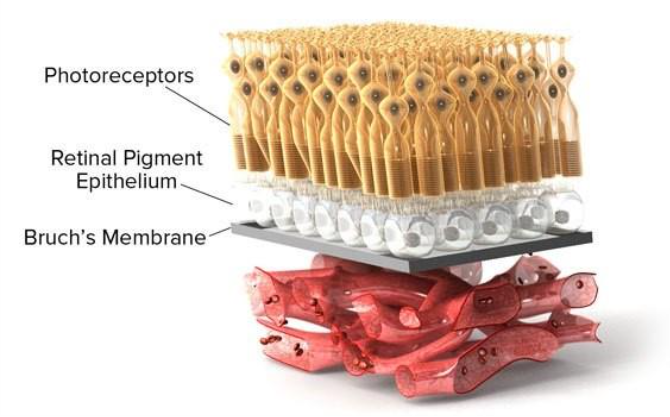
Central serous chorioretinopathy (CSCR), also known as central serous retinopathy, is a condition characterized by pathologic changes in the choroidal capillaries and retinal pigment epithelium (RPE). This leads to leakage and accumulation of fluid under the retina. This can cause blurry vision, distortion, blind spots and objects appearing smaller than they are. You may also have trouble with bright light and contrast sensitivity could be reduced, which is how well you can see an object from its background. Sometimes the swelling may not cause you any visual symptoms.
For most patients this condition resolves all by itself within a few months, without needing treatment. But sometimes the fluid leakage can recur or persist, leading to longstanding reduced vision. In such situations, treatment may be necessary.
What is photo dynamic therapy (PDT)?
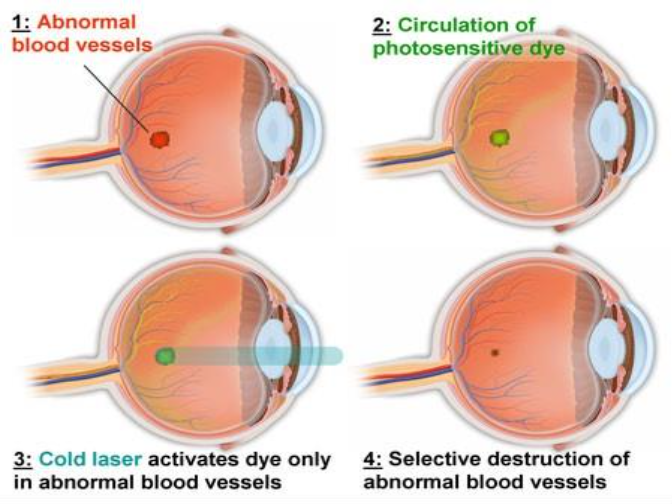
Photodynamic therapy (PDT) with verteporfin is used in the treatment of central serous chorioretinopathy (CSCR). It involves giving you a drug called verteporfin (brand name Visudyne®) as an injection into a vein in your arm. The drug circulates through your body and is absorbed by the abnormal leaky blood vessels in the back of your eye. A low energy (cold) laser is then directed at these vessels to activate the drug. Activated verteporfin slows down blood flow and allows the fluid leakage (CSCR) to settle.
Why should I have PDT?
We recommend that you should have PDT because your CSCR has not cleared. About 8 in 10 patients who undergo PDT will notice an improvement in their vision within 2 months of a single course of treatment. In some patients there is no effect following the first session of PDT, and a second and final course may be needed about 3 months later.
The potential risks of surgery
PDT with verteporfin therapy is not suitable for everyone. People who have a very rare condition called porphyria, those with severe liver problems and those with allergies to any of the ingredients of verteporfin should not receive it. Check with your ophthalmologist (eye doctor) if you think any of these applies to you.
The most common side effects (reported in 10% to 30% of patients treated) are injection site reactions, nausea (feeling sick), temporary back pain during the injection, and changes in vision, including blurring. You should let the staff in the eye clinic know if you experience any of these problems during your appointment.
1 or 2 out of every 100 people who undergo this procedure experience a decrease in vision in the first 7 days after treatment. Some of these patients achieve a partial or full recovery. If you experience substantial vision loss, you should contact your ophthalmologist or retinal specialist immediately.
The day of your operation
Be sure to bring sunglasses and clothes that protect your skin from sunlight (hat, scarf, long sleeves, trousers, gloves) for your journey home.
After the surgery
The verteporfin dye makes your skin very sensitive to day light for 48 hours after the treatment, so you should avoid direct sunlight or bright indoor (halogen) light during this period. Sunscreen creams do not offer any protection during this period.
However, this does not mean you need to stay completely in the dark. Exposure to normal indoor lighting will help your body to eliminate verteporfin more quickly.
If you need to go outdoors in daylight during this time, you must cover all parts of your skin (including your head) and eyes by wearing protective clothing and dark glasses.
If you have any concerns after your operation, please contact the staff in the eye treatment centre on the following
|
From 9am to 5pm Monday to Friday: |
0300 373 5884 |
| From 5pm to 9am and at weekends: |
0300 614 5000 and ask for the eye doctor on call |
Contact us
If you have any queries relating to this information, please contact the Ophthalmology service.
About this information
Service:
Ophthalmology
Reference:
QQ/040
Approval date:
1 May 2025
Review date:
1 May 2027
Click ‘show accessibility tools’ at the bottom of the page

Then click ‘select language’

Alternative formats
You can use the accessibility toolbar at the bottom of your screen to:
-
Change the text size
-
Adjust the font
-
Modify the colour contrast
-
Use the translate function
If you would like this information in another format, such as Braille, audio, or easy read, please speak to a member of staff.
You can also print as well as download as PDF using the “Print this page” button at the end of the page.
Staff will print a copy for you on request
Important note
This page provides general information only. It is developed by clinical staff and is reviewed regularly every 3 years for accuracy. For personal advice about your health, or if you have any concerns, please speak to your doctor.