

Advice after your nerve block for surgery
On this page…
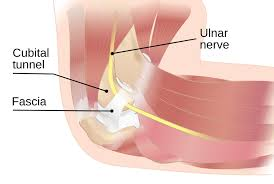
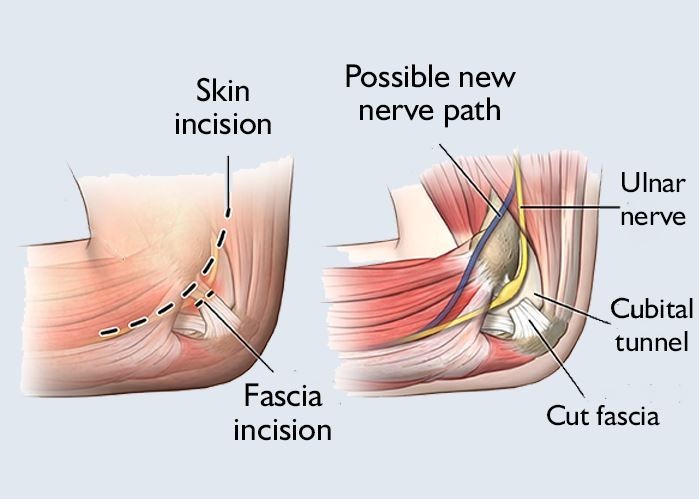
This is a condition where the ulnar nerve gets compressed in the cubital tunnel of the elbow. As you can see from the picture below, the cubital tunnel is made up of the humerus (upper arm bone), ulna (forearm bone), the elbow joint capsule, ligaments and a band of fascia spanning between the humerus and ulna. The cubital tunnel sits on the back of your elbow on the inner side, and the ulnar nerve passes through it. Hitting the ulnar nerve at the cubital tunnel is commonly known as “hitting your funny bone”.
Symptoms of Cubital Tunnel Syndrome
The ulnar nerve provides feeling to the ring finger and little finger and the front and back of the hand on that side (see picture below). This nerve controls some of the muscles which bend the ring finger and little finger and helps bend the wrist.
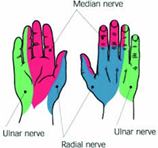
Because of this, when the nerve becomes compressed, it produces pins and needs and numbness in the hands. Many people also report waking at night with numbness or pain. Depending on how severe the compression is, you may also experience stiffness, weakness or clumsiness.
Cubital Tunnel Decompression
Surgery aims to relieve the pressure on the ulnar nerve, to allow it to send and receive the correct signals to the brain once again.
The surgeon will make a cut over the inner side of your elbow and then release any tight tissue that may be compressing the nerve. Occasionally a piece of bone needs to be removed or the whole nerve needs to be re-routed around the front of the elbow to avoid it getting compressed.
You will normally be discharged home the same day and your hand will be dressed and bandaged for at least one week after the surgery.
After the surgery
You may be given a sling after your surgery which can be worn for comfort until you see hand therapy a week after surgery.
Initial pain and discomfort can be common and this can be managed with simple painkillers or those prescribed by your doctor.
You can move your hand gently and for light activities as pain allows. You can straighten the elbow gently as pain allows but avoid bending it beyond 90 degrees for the first two weeks.
Do not drive for the first 24 to 48 hours after receiving anaesthesia. You may begin driving once you feel confident that you can grip the steering wheel firmly enough to control the car. Most people can return to driving after one week. Begin with short drives and have someone in the car with you initially.
The wound will usually be healed two weeks after surgery.
You should avoid heavy lifting tasks for six weeks after the surgery.
Most patients find relief from their symptoms soon after surgery, but recovery can continue for up to 18 months; especially if you had symptoms for several months before your surgery. Strength can take the longest to recover. Sometimes, full recovery is not possible, this is usually when the nerve damage was severe before your surgery.
Swelling
Your elbow, forearm, and hand may be swollen after surgery. It is important to get your swelling down as quickly as possible. To do this, you should elevate your elbow above your heart, and your hand above your elbow as much as possible.
- Reach your arm in the air or above your head regularly during the day
- Rest your hand on your shoulder
- Rest your hand on cushions
Scar Management
Scars can become raised, thick/stuck and a deep red/purple colour. They can be uncomfortable to touch and stop you moving your fingers and wrist easily.
24 hours after your stitches are out you should begin to massage your scar. If you have dissolvable stitches, you can start to massage ten days after your surgery. Massage will help the scar become soft, flat, more pale and give the scar more movement.
Your scar may take up to two years to be fully mature. Massage for the first few months after surgery will make the biggest difference to your scar.
Use thick, unscented cream like E45, Nivea, Aqueous or similar.
Massage needs to be firm and deep, not like putting on hand cream. Support your hand and massage firmly/with pressure in circles across the scar.
Exercises
Your hand may have reduced grip strength, and your hand, wrist and elbow may become stiff following surgery. Perform the following exercises to make sure your fingers, wrist, and elbow don’t get stiff following surgery. Repeat all the exercises 4-5 times per day.
Exercises are also very important to help reduce swelling, and to prevent the scar from getting stuck. You may feel uncomfortable or tight feelings when you are doing the exercises, but they should not be painful. Your exercise programme will be guided by your hand therapist.
|
|
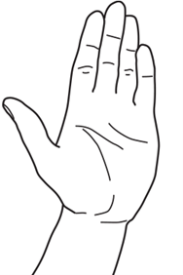
1. Straighten your fingers fully. |
|
|
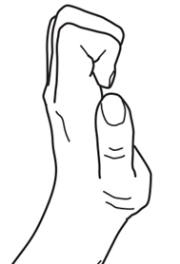
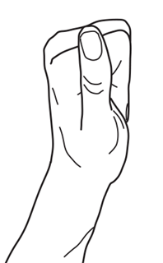
Bend your fingertips into a hook. |
|
|
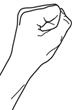
3. Roll your fingers into a full fist. |
|
|
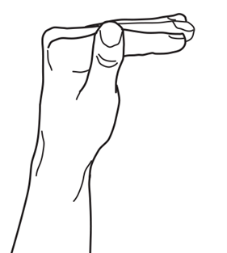
4. Straighten your fingers, keeping your knuckles bent. |
|
|
5. Bend your fingers, keeping your tips straight |
|
|
|
|
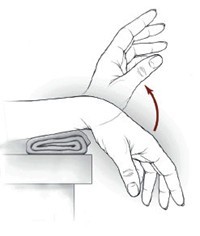
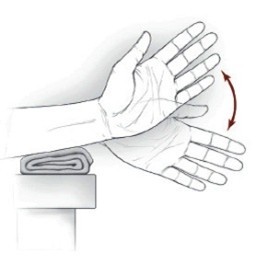
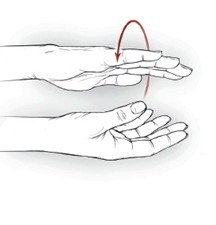
| With your arm flat over the edge of a table, lift and lower your wrist up and down. | With your arm on its side over the edge of a table, lift and lower your wrist up and down. | With your arm tucked into your side, turn your arm so your palm faces up, then turn so your palm faces down. |
|
|
Straighten your elbow all the way. |
|
|
In the first 2 weeks, bend your elbow to 90º degrees only. After 2 weeks you can start bending further. |
The following exercise can be started after 2 weeks and is to be completed only once a day. Hold each position for 5 seconds, repeat series 5 to 10 times depending on how it feels for you.
You should only take the movement up to the point it becomes painful, not beyond. These symptoms should go away immediately or within a few minutes of finishing the exercise. If you experience ongoing, new pain after doing any of the exercises, stop them and wait until you are reviewed by your hand therapist.
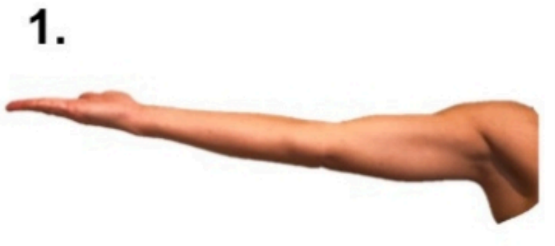 |
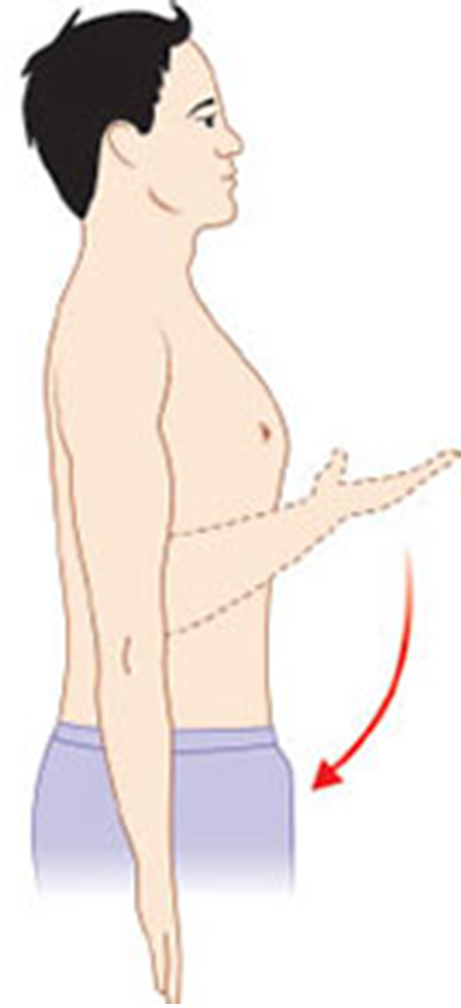
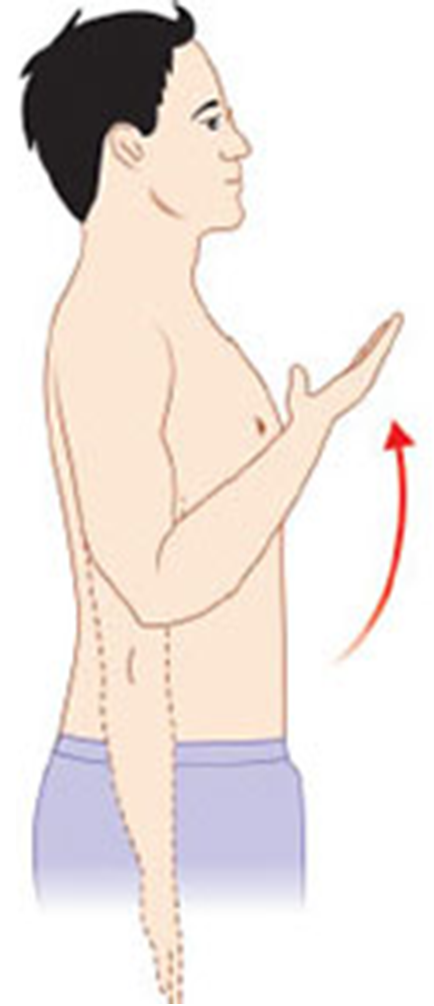
Begin with your arm out, palm side of the hand facing up. |
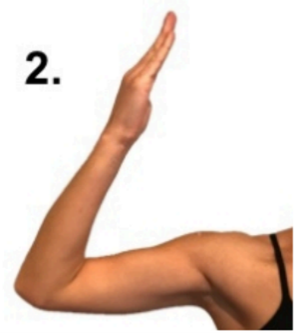 |
Bend the elbow toward you, palm side facing you. |
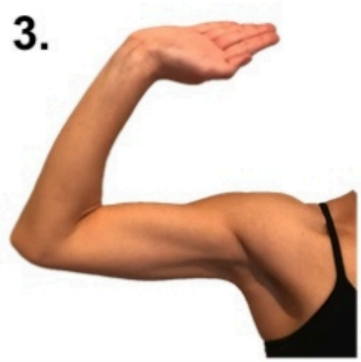 |
Rotate the palm of your hand outwards and bend your wrist so that your fingers are pointing towards you. |
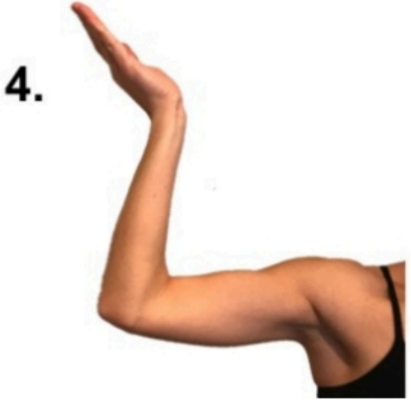 |
Twist your wrist so that the palm of your hand is now facing upward. |
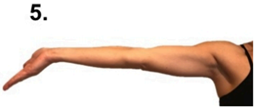 |
While your wrist remains bent, stretch your arm into a straight position, with your fingers bent. |
Contact details
Hand therapy departments:
0300 6133396 for Frimley
0300 6140540 then Option 2 Wexham or Option 3 for Heatherwood
Contact us
If you have any queries relating to this information, please contact the Hand therapy service.
About this information
Service:
Hand therapy
Reference:
UU/101
Approval date:
23 February 2026
Review date:
1 February 2029
Click ‘show accessibility tools’ at the bottom of the page

Then click ‘select language’

Alternative formats
You can use the accessibility toolbar at the bottom of your screen to:
-
Change the text size
-
Adjust the font
-
Modify the colour contrast
-
Use the translate function
If you would like this information in another format, such as Braille, audio, or easy read, please speak to a member of staff.
You can also print as well as download as PDF using the “Print this page” button at the end of the page.
Staff will print a copy for you on request
Important note
This page provides general information only. It is developed by clinical staff and is reviewed regularly every 3 years for accuracy. For personal advice about your health, or if you have any concerns, please speak to your doctor.