

Advice after your nerve block for surgery
On this page…
Introduction
As outlined in our leaflet ‘Nose and sinus problems’, mucous is transported from the sinuses into the nose via very narrow channels and clefts. Inflammation and swelling in these channels can block the drainage of the sinuses causing mucous to become stuck in the sinuses.
The mucous in the sinuses Is an excellent medium for infection resulting in sinusitis. If the swelling is extensive, oedema or fluid can occur in the lining of the nose and sinuses and nasal polyps develop.
Endoscopic sinus surgery (ESS) Is usually recommended by your doctor if medical treatment of your nose and sinus problems has not been successful.
Conditions in which ESS may help include:
• Recurrent acute sinusitis
• Chronic sinusitis
• Nasal polyps
• Certain nasal tumours
• Severe and persistent nose bleeds
• Watery eyes (epiphora)
During ESS (endoscopic sinus surgery) the drainage channels of the sinuses are widened and if present, nasal polyps are removed. Similar surgical techniques are sometimes used to remove nasal tumours by placing a clip on the major arterial blood supply to the nose or for widening the tear duct from the eye to the interior of the nose.
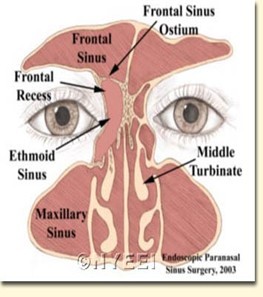
About the Operation:
This keyhole surgery is performed using endoscopes and delicate instruments, which are placed in the nose.
The surgeon often visualises the inside of the nose on a monitor. During the procedure the drainage channels of the sinuses are widened and any nasal polyps are removed. The surgeon often uses a microdebrider or sinus shaver to remove nasal polyps in particular. This device uses a rapidly rotating blade and suction to remove the polyps from the nose.
During the operation it may be necessary to straighten the nasal septum, which is the partition inside the nose. This part of the operation is called a septoplasty (see separate information sheet available).
ESS is usually performed under a general anaesthetic. Most surgeons recommend staying in hospital over night for observation. Occasionally, if the surgery is performed early in the morning, you will be allowed home the same day.
What to expect afterwards:
After the operation your nose and sinuses will feel very blocked up and congested for several days. Your face will feel uncomfortable and you may have headaches, both of which may be most severe a few days after the operation. Painkillers will be prescribed for you to take home.
Crusts of dried blood and mucous will form in the nose. To help clear the crusts you will be asked to ‘douche’ the nose with salt water. A separate information sheet (saline nasal douche) will be given to you outlining how this is done.
Please do not blow your nose for 48 hours after the surgery. Following this you may gently clear the nose but do not blow vigorously for 2 weeks.
If infection is seen in the nose and sinuses at the time of surgery, you may be given a course of antibiotics to take home. Occasionally infection develops after the operation. Patients with nasal polyps are often given a course of steroid tablets to take home. Please advise your nurse or doctor if you have nay drug allergies or suffer with diabetes, glaucoma or gastro-oesophageal reflux disease.
During the 2 weeks after the surgery, the congestion usually subsides. However, if a septoplasty was performed, the congestion may last for much longer.
You should organise 2 weeks off work after the operation. You are advised to stay at home and avoid crowded places such as offices and commuting by train, in order to try to avoid catching a cold. Working from home is often possible.
Your follow up outpatient appointment is usually 2 weeks after the surgery. The doctor will look into your nose with an endoscope to ensure the nose and sinuses are healing satisfactorily.
Occasionally adhesions or scar tissue, which has formed in the wrong areas, are removed. Many patients will be placed on a topical nasal steroid spray at this stage. If nasal polyps were present, you may have to stay on the spray in the long term to defer any recurrence of polyps. Unfortunately, surgery cannot cure the problem of nasal polyps.
Complications:
Then nose and sinuses are adjacent to several important structures:
• Eye
• Brain
• Major blood vessels
Injury to one or more of these structures is possible, although very unlikely. The risk of one of these complications depends very much on the precise nature of the surgery and your doctor will discuss this with you. A CT scan of the nose and sinuses may be performed prior to surgery to help to reduce the risk of problems.
Injury to the bone of the eye socket may cause some swelling and bruising around the eye. A black eye can occur. These problems usually resolve a few days after surgery. Active bleeding into the eye at surgery may require a small external incision between the nose and eye to stop the bleeding. Double vision and loss of vision have been described with this operation but both are extremely unlikely.
Injury to the bone of the skull base at the top of the nose and sinuses could result in leakage of the clear fluid, which bathes the brain into the nose. This clear fluid is called cerebrospinal fluid (CSF). The chances of a CSF leak occurring are extremely unlikely. If identified during the operation, an attempt would be made to patch the skull base bony defect immediately. Alternatively, if the CSF leak was identified later on, a second operation may be required.
Injury to a major blood vessel in the nose and sinuses are rare.
Usually small dressings or packs are placed in the nose at the end of your operation. These are removed immediately you wake up in the recovery area, or 2 to 3 hours later, depending on the surgeon’s preference. Occasionally it is necessary for nasal packs to stay in overnight or even be placed back into the nose in which they were removed earlier. Removal of nasal packs can be uncomfortable.
If any of these problems arise after you have If any of these problems arise after you have gone home please contact the wards:
Frimley Park Hospital: Short Stay Surgery ward Direct No: 0300 613 3216
F1 (children’s ward) 0300 613 4252
Any questions?
The team involved in your care have written this information booklet to make your admission as smooth as possible. However, it does not cover every aspect of your care and the staff will always be happy to answer any other questions or points of concern.
Contact us
If you have any queries relating to this information, please contact the Ear or nose and throat (ENT) service.
About this information
Service:
Ear, nose and throat (ENT)
Reference:
G/010
Approval date:
23 February 2026
Review date:
1 February 2029
Click ‘show accessibility tools’ at the bottom of the page

Then click ‘select language’

Alternative formats
You can use the accessibility toolbar at the bottom of your screen to:
-
Change the text size
-
Adjust the font
-
Modify the colour contrast
-
Use the translate function
If you would like this information in another format, such as Braille, audio, or easy read, please speak to a member of staff.
You can also print as well as download as PDF using the “Print this page” button at the end of the page.
Staff will print a copy for you on request
Important note
This page provides general information only. It is developed by clinical staff and is reviewed regularly every 3 years for accuracy. For personal advice about your health, or if you have any concerns, please speak to your doctor.