

Advice after your nerve block for surgery
On this page…
Introduction
Selective laser trabeculoplasty (SLT) is a treatment to reduce the pressure within the eye (intraocular pressure / IOP). It is an effective and safe treatment option for patients with glaucoma or ocular Hypertension.
Lowering the IOP is vital to prevent worsening of glaucomatous damage to the optic nerve, and to preserve vision and prevent blindness. Selective laser trabeculoplasty (SLT) is a flexible treatment option and can be repeated if necessary, depending on the individual patient's response.
How it works
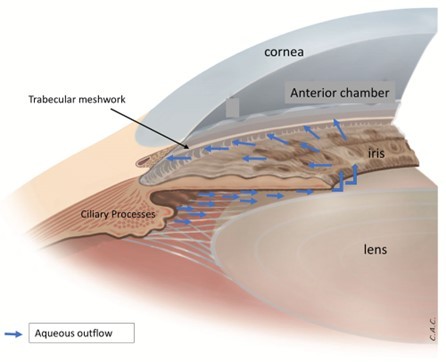
Aqueous humor is a clear fluid that is produced constantly within the eye by the ciliary body which is a ring of tissue behind the base of the iris. This fluid circulates within the front chamber of the eye and is drained out through a sieve-like trabecular meshwork.
The balance between the production of fluid in the eye and the outflow is crucial to maintaining a healthy intraocular pressure, which in turn helps the eye function normally.
The trabecular meshwork is situated around the periphery of the iris. SLT uses a low-energy laser light to target only the melanin rich cells in the drainage channel of the eye without damaging its surrounding structures. The gentle laser treatment induces a response from the body to clear the affected cells and rebuild the meshwork so that it functions more effectively, thereby reducing the IOP.
On the operation day
You cannot drive on the day of your operation. This is a day case surgery takes place in the outpatient eye clinic so you will be able to go home the same day.
Some eye drops will be given to constrict your pupil; these drops might cause a temporary headache and can take up to 1 hour to work. A doctor will explain the procedure and take your written consent. You can also ask the doctor any questions you have.
Special drops may be given before the procedure to prevent increase of eye pressure immediately after the treatment. Once seated in front of the laser machine, you will have anaesthetic drops put in to numb the front of your eye. A mirrored contact lens will then be placed on the front surface of your eye. This is not painful, but it might feel a little strange.
During the laser treatment, you might see some flashes of light and hear clicking noises. Most patients tolerate the laser treatment well, but some might feel a slight discomfort. The procedure takes around 10 to 15 minutes. The doctor may put some drops in the eye after the laser treatment to prevent a rise in eye pressure.
After your treatment, the pressure in your eye will be checked. The doctor will advise if you need to use any eye drops until the next review.

After the procedure
Your vision can be blurred for a few hours following your laser treatment, but this will settle. The chance of your vision being permanently affected from SLT is extremely small. If you are concerned that your vision is not returning to normal, please contact our department.
Rarely, the pressure in the eye rises to a very high pressure and does not come down. If this happens, you might require surgery to lower the pressure. This is a very unusual event.
Studies show a 78% success rate for SLT, with some patients responding well to the treatment but others not responding at all. We cannot predict exactly how well the laser will work as your response is determined by the type of glaucoma you have and the basic make-up of your eye.
If you take eye drops, you will usually need to continue these to lower the pressure after SLT.
It will take up to 8 weeks after the laser treatment for the pressure to be reduced.
The effects of the laser treatment might wear off in time. About half of all treatments stop working after 5 years but the treatment can be repeated.
Post-op appointment
You will have a follow-up appointment approximately 6 weeks after the laser to check the eye pressure. You might require additional laser surgery to lower the pressure if it is not sufficiently low after your first laser treatment.
If you have any concerns, please contact the staff in the eye treatment centre on the following numbers:
| From 9am to 5pm Monday to Friday: | 0300 373 5884 |
| From 5pm to 9am and at weekends: | 0300 614 5000 and ask for the eye doctor on call |
Contact us
If you have any queries relating to this information, please contact the Ophthalmology service.
About this information
Service:
Ophthalmology
Reference:
QQ/009
Approval date:
2 August 2024
Review date:
1 July 2027
Click ‘show accessibility tools’ at the bottom of the page

Then click ‘select language’

Alternative formats
You can use the accessibility toolbar at the bottom of your screen to:
-
Change the text size
-
Adjust the font
-
Modify the colour contrast
-
Use the translate function
If you would like this information in another format, such as Braille, audio, or easy read, please speak to a member of staff.
You can also print as well as download as PDF using the “Print this page” button at the end of the page.
Staff will print a copy for you on request
Important note
This page provides general information only. It is developed by clinical staff and is reviewed regularly every 3 years for accuracy. For personal advice about your health, or if you have any concerns, please speak to your doctor.