

Advice after your nerve block for surgery
On this page…
Structure of the Lungs
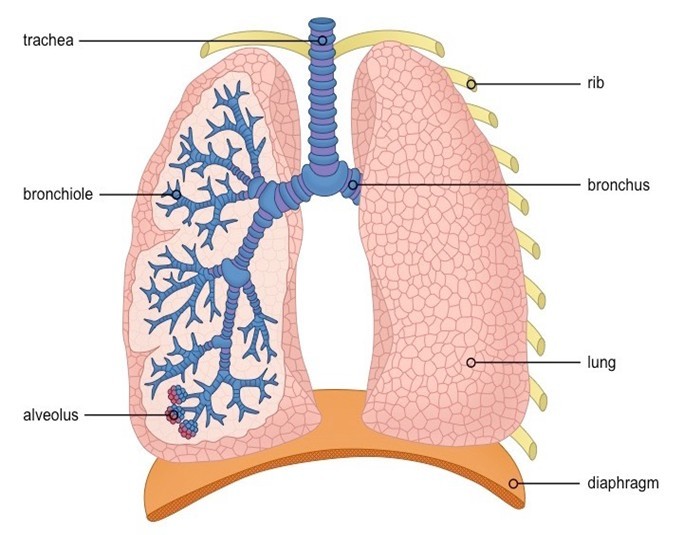
About your lungs
The lungs lie on either side of the heart and completely fill the rib cage. Both lungs are made up of lobes, 3 on the right and 2 on the left. The right lung is slightly larger than the left. Each lung is approximately 3 litres in volume.
The lungs are rather like a giant sponge. They consist of a mass of fine tubes, the smallest of which end in tiny air sacs called alveoli. Each lung is attached to the walls of the rib cage by a membrane called the pleura. The rib cage is known as the thoracic cavity. When the main muscles of respiration work they cause the lower ribs to pull outwards and upwards like a bucket handle. At the same time the diaphragm tightens from its domed position and as it flattens it allows the lungs to drop. Together the combined action of the muscles of respiration allows the lungs to enlarge and air to be drawn into them.
During the course of a day as much as 10,000 litres of air moves in and out of the lungs. This air passes through your nose and mouth, across the throat and down into the windpipe or trachea. This tube then splits into two smaller tubes, each supplying a lung, and they are known as the left and right main bronchi. Air passes down the bronchi, which further divide into smaller airways called bronchioles, which divide further and terminate in the alveoli. These sacs have very thin walls and are liberally supplied with blood vessels known as capillaries.
The oxygen we breathe into our lungs during respiration passes through the walls of the alveoli into the bloodstream where it is then carried to those parts of the body that require it. The waste products of respiration (carbon dioxide etc) pass back from the blood into the alveoli and are then breathed out. Each breath can also contain impure particles such as germs and pollutants. To help protect the body against these unwanted elements the airways have defence mechanisms - cilia - which are tiny hairs lining the bronchi and help to waft unnecessary particles out of the lungs, and mucus, which helps to keep the airways clean and well lubricated.
Contact us
If you have any queries relating to this information, please contact the Respiratory medicine service.
About this information
Service:
Respiratory medicine
Reference:
W/037
Approval date:
1 November 2025
Review date:
1 November 2028
Click ‘show accessibility tools’ at the bottom of the page

Then click ‘select language’

Alternative formats
You can use the accessibility toolbar at the bottom of your screen to:
-
Change the text size
-
Adjust the font
-
Modify the colour contrast
-
Use the translate function
If you would like this information in another format, such as Braille, audio, or easy read, please speak to a member of staff.
You can also print as well as download as PDF using the “Print this page” button at the end of the page.
Staff will print a copy for you on request
Important note
This page provides general information only. It is developed by clinical staff and is reviewed regularly every 3 years for accuracy. For personal advice about your health, or if you have any concerns, please speak to your doctor.