

Advice after your nerve block for surgery
On this page…
Introduction
These can be injured in a number of different ways often by falling or sustained during sporting activity.
They are complex as they involve a number of different structures:
• Bones
• Ligament
• Cartilage (meniscus)
• Tendons
• Muscles
An X-ray will only show injury to the bone. Which is why you may not have had an XR
What are the symptoms of a knee injury
You may experience:
• Pain
• Swelling
• Stiffness and/or loss of movement
• Weakness of the thigh muscles
• Tightness at the back of the knee
What may help your knee injury
- Rest: Initial rest will help to enable recovery, but should not be total rest
- Ice: In the first few days apply an ice pack (wrapped in a tea towel) to the painful/swollen area. This can be left on for up to 20 mins and repeated every 2 hours, providing it is comfortable. Do not leave for longer as it may cause a burn.
- Pain relief: Simple analgesia such as paracetamol or Ibuprofen may help relieve the pain and swelling.
- Elevation: This will help to reduce swelling of the affected area. Ideally your knee should be higher than your hip.
Walking will not damage your knee any further. Always try to walk normally, by putting your heel down first. You may have been given crutches for a short time to help with pain and swelling, to mobilise. These should not be relied on in the long term.
Please return crutches to the Emergency Department when no longer required
Exercise
It is important that you start to exercise your knee as soon as possible, unless advised otherwise. By exercising and regaining normal movements the feeling of stiffness and pain will gradually settle.
The exercises will be most effective if practiced regularly. We suggest doing them 3-4 times a day. It is better to repeat the exercises a few times, rather than once a day for a longer period.
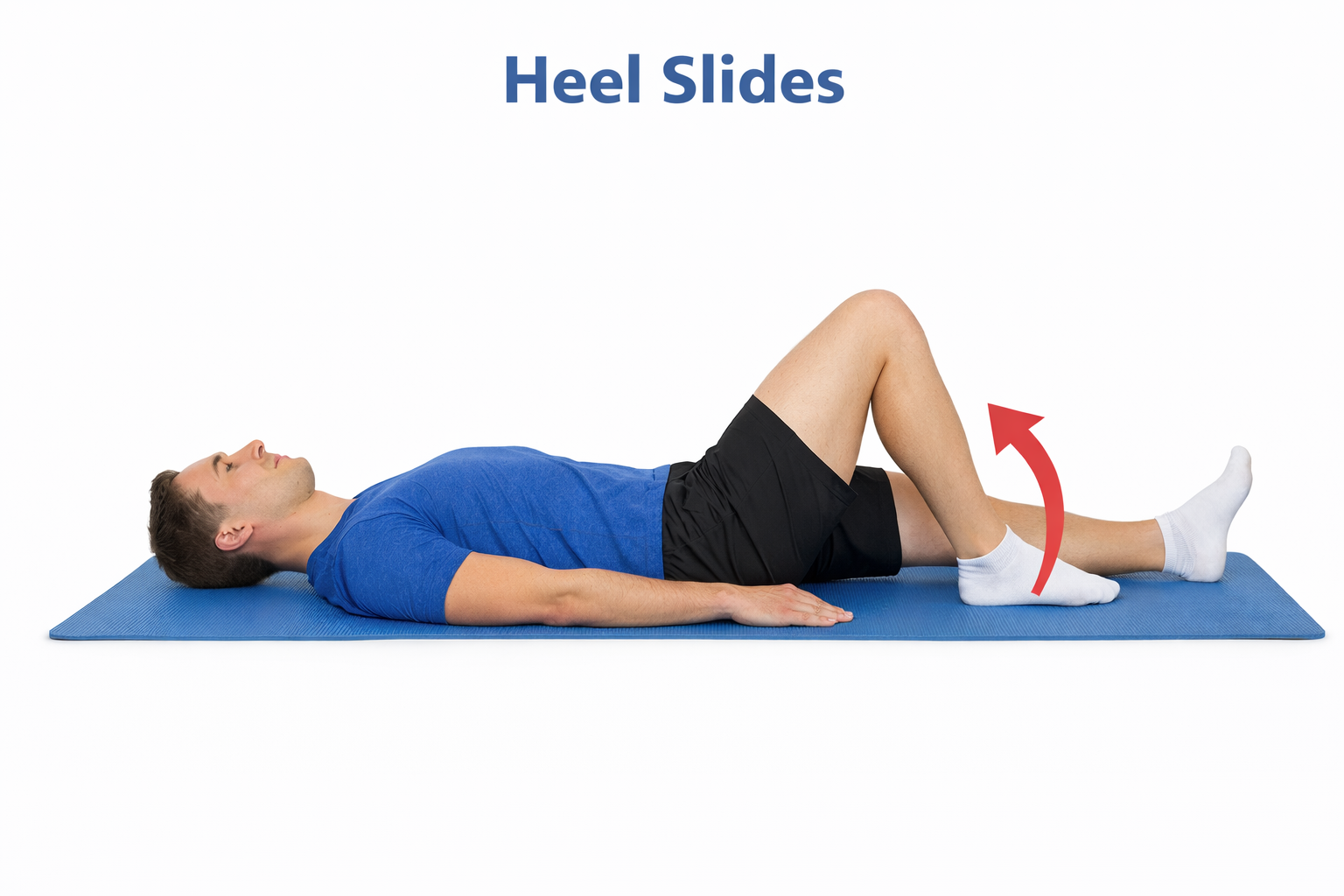 |
Heel slides Lie on your back with your legs straight. Bend the symptomatic leg as far as you can, sliding your heel towards your buttocks, keeping the knee pointing to the ceiling throughout this movement. Slide the heel back down, reversing the movement until your leg is straight again. |
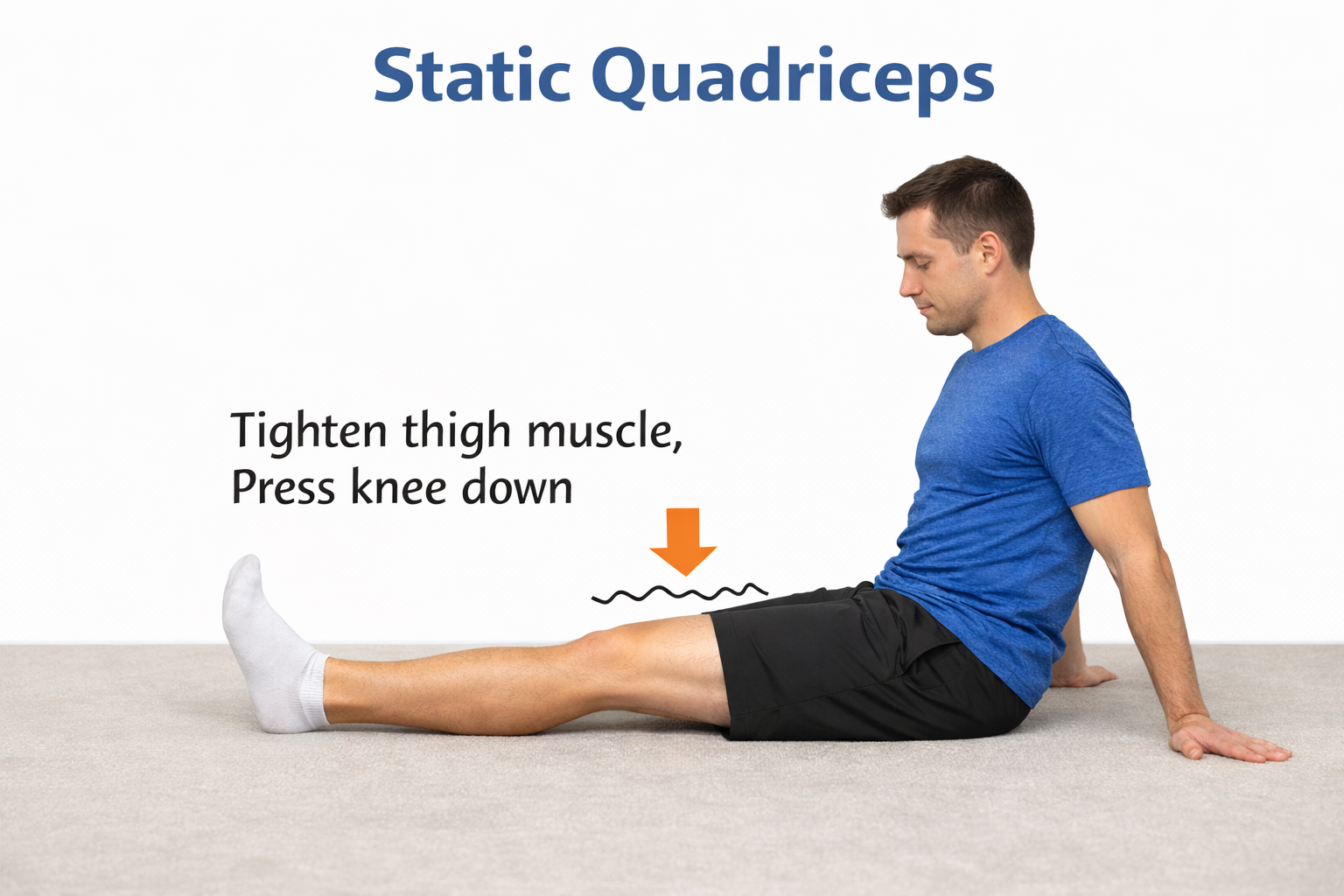 |
Static quadriceps Sit upright on your bed or the floor, with your legs out straight in front of you. Point your toes directly up to the ceiling. Tighten your thigh muscle, pushing the back of your knee down into the floor. Your should be able to see the muscle tensing. Relax and repeat. |
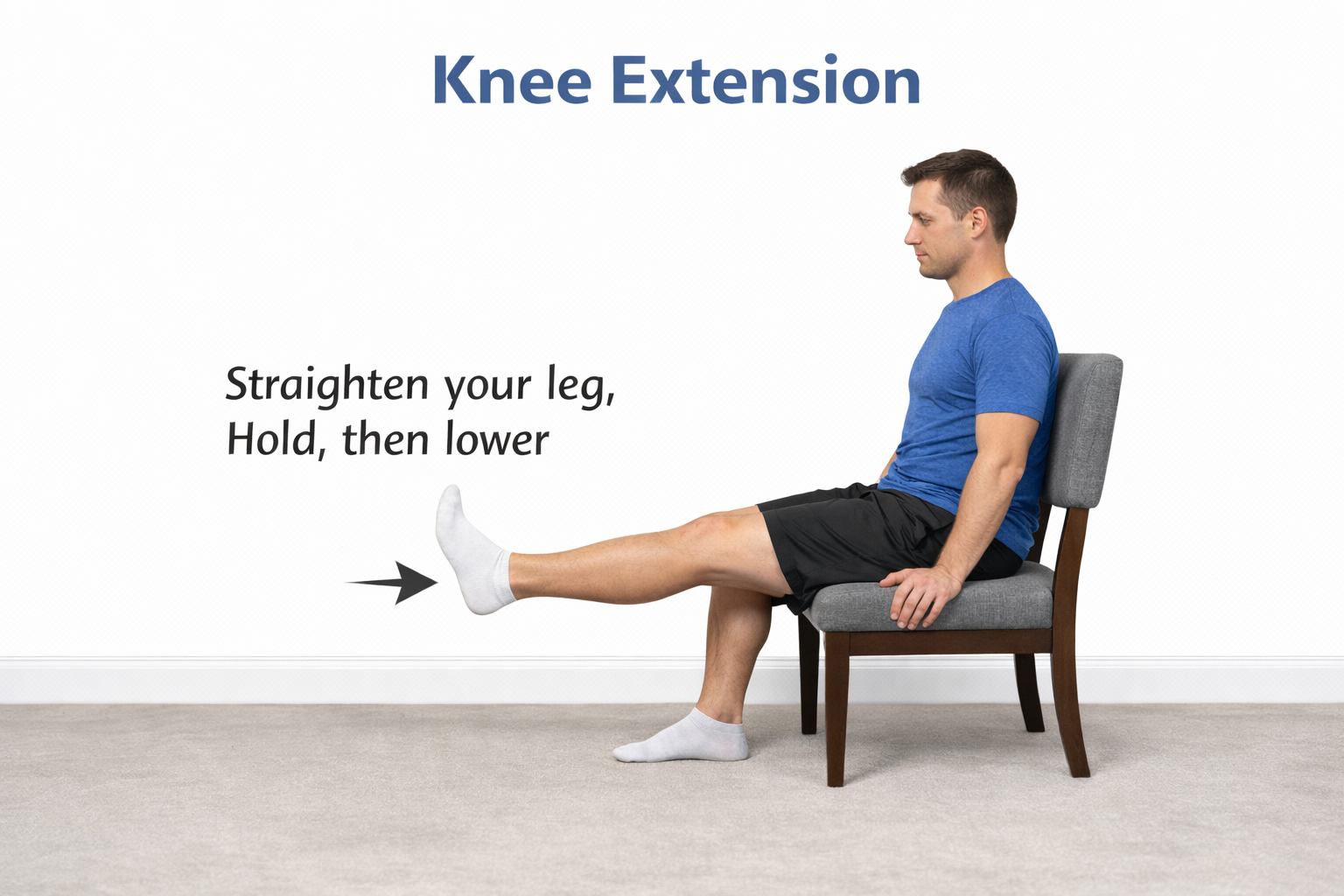 |
Knee extension in sitting position Sit on the chair. Stretch one leg out and keep it in that position for the required duration. Return your leg to the starting position and then repeat with your other leg. |
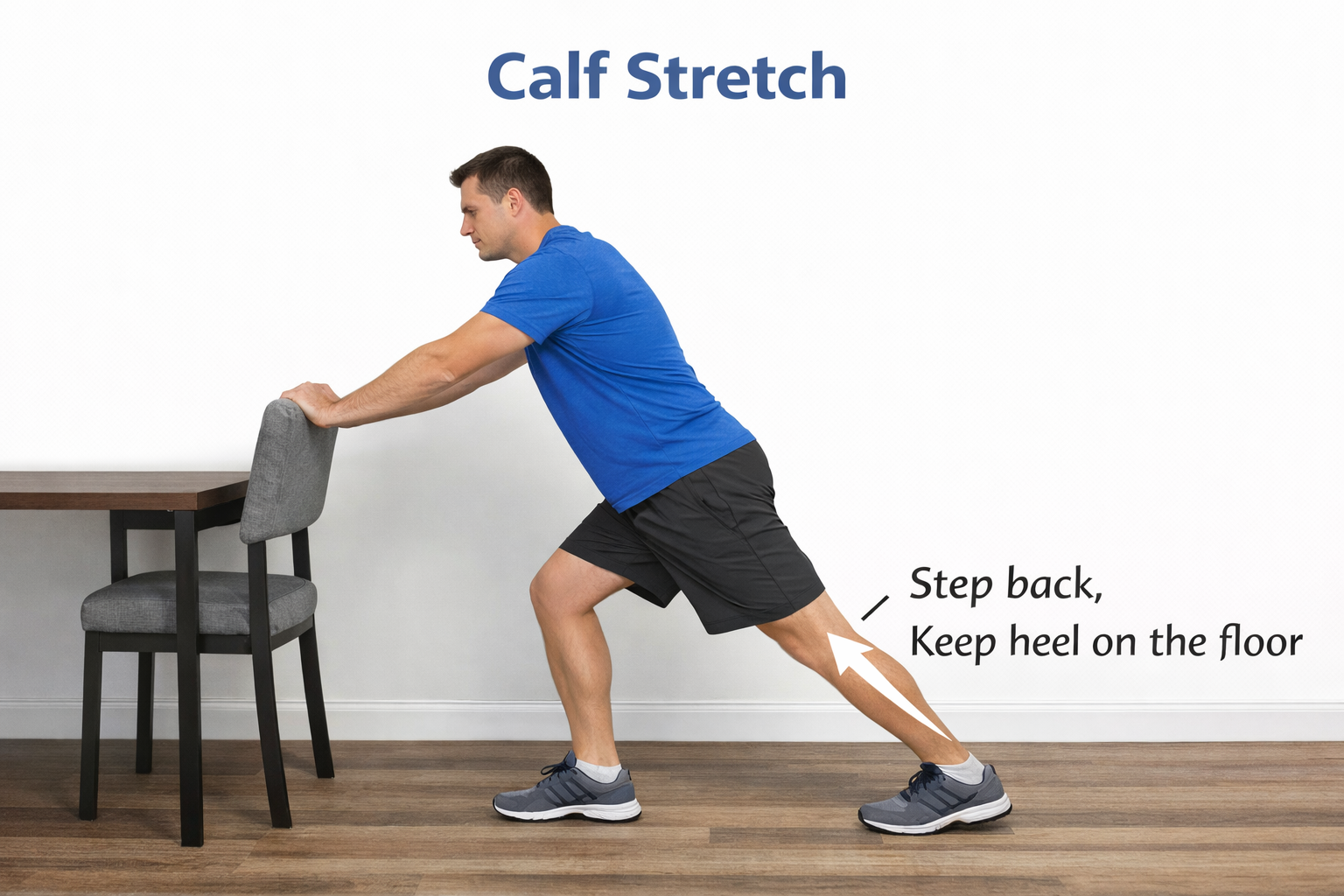 |
Calf stretch standing In a standing position, hold on to a table or chair for support and step the symptomatic leg back behind you. Keep the heel on the floor and the toes pointing forwards. Bend the front knee, moving your body forwards, until you feel a stretch in the back of the calf. Make sure your heel does not come off the floor and your back knee does not bend |
If you are concerned contact your GP or you can also contact 111 https:/
Contact us
If you have any queries relating to this information, please contact the Emergency department (ED) service.
About this information
Service:
Emergency department (ED)
Reference:
A/019
Approval date:
1 November 2024
Review date:
1 November 2027
Click ‘show accessibility tools’ at the bottom of the page

Then click ‘select language’

Alternative formats
You can use the accessibility toolbar at the bottom of your screen to:
-
Change the text size
-
Adjust the font
-
Modify the colour contrast
-
Use the translate function
If you would like this information in another format, such as Braille, audio, or easy read, please speak to a member of staff.
You can also print as well as download as PDF using the “Print this page” button at the end of the page.
Staff will print a copy for you on request
Important note
This page provides general information only. It is developed by clinical staff and is reviewed regularly every 3 years for accuracy. For personal advice about your health, or if you have any concerns, please speak to your doctor.