

Advice after your nerve block for surgery
On this page…
What are hospital-associated blood clots?
A blood clot is a collection of blood that thickens inside a blood vessel and can partly or completely block blood flow. Sometimes people who are in hospital, or who have recently been in hospital, have a higher chance of developing a blood clot. This is called a hospital-acquired blood clot. A hospital-associated blood clot happens in patients either when you are in hospital or up to 90 days after you are discharged. Most people do not develop a clot, and hospitals work hard to reduce the risk.
Types of blood clots
Deep-vein thrombosis (DVT)
A DVT is a blood clot that forms in a deep vein, most often in the leg or pelvis.
Common symptoms:
• Swelling in one leg
• Pain or tenderness (often in the calf)
• Warm skin
• Change in colour of the leg (red, purple or blue)
Pulmonary embolism (PE)
A PE happens when part of a clot travels to the lung and blocks blood flow.
Common symptoms:
• Chest pain (often worse when breathing in)
• Sudden shortness of breath
• Fast heart beat
• Coughing (sometimes with blood)
• Feeling dizzy or faint
A PE can be serious and needs urgent medical attention. If you develop any of these symptoms, either in hospital or after you go home, please get medical advice immediately. Health professionals use the term venous thromboembolism (VTE), to cover both DVT and PE.
Are blood clots common?
Blood clots happen in the general population in about one in 1000 people every year. You may have heard about people getting a DVT after flying, but you are much more likely to get a blood clot after going into hospital. In fact, about two-thirds of all blood clots happen during or in the 90 days after a stay in hospital. Although these risks are still small, the consequences can be serious. Blood clots can lead to long-term medical problems such as permanent swelling in the leg, varicose veins, and even leg ulcers. They can even lead to death.
Who is at risk?
Any adult who is unwell and admitted to hospital is at risk. All people admitted to hospital will have their risk of developing blood clots assessed by a healthcare professional. They will talk with you about what will be done to protect you against blood clots. Remember, it’s OK to ask if you are unsure about your own risk.
Factors that put people at greater risk of blood clots include the following:
- A previous clot
- A diagnosis of cancer
- Immobility compared to pre hospital admission
- Taking oestrogen-containing contraceptives and hormone replacement
- Having an operation
- Suffering a significant injury or trauma
- Being pregnant and after giving birth
- Dehydration
- Smoking
- Being overweight (body mass index (BMI) of more than 30)
- Varicose veins
- Certain 'sticky blood' conditions such as antiphospholipid syndrome or Factor V Leiden
- Being older than 60
- if you are in a plaster cast or boot and not weight bearing
What can I do to reduce my risk?
Keep moving
Movement helps blood flow.
Try to:
- Walk regularly if it is safe
- Move your legs and ankles in bed or in a chair
- Avoid sitting still for long periods
Examples:
- Point your toes up and down
- Circle your ankles
- Bend and straighten your knees
Ask staff what activity is safe for you.
Drink enough fluids
Unless your doctor has told you otherwise drink regularly throughout the day and try not to become dehydrated.
Wear compression stockings or inflatable sleeves if prescribed
Stockings
Some patients are given special stockings. These gently squeeze the legs and help blood flow back towards the heart. You should be shown how to wear them. You should tell a health professional about any new pain or discomfort in your feet or legs. Your stockings will be removed for a short time once a day so that you can have a wash and check for any skin problems.
Inflatable sleeves
The clinical team may ask you to wear calf or foot pumps. These are special inflatable sleeves which you wear around your legs or feet while you are in bed or sitting still in a chair. These will inflate automatically and provide pressure at regular intervals, increasing blood flow out of your legs.
Take blood-thinning medication if prescribed
Most patients at risk will be prescribed a small dose of an anticoagulant as a daily injection or tablets. This reduces the chance of having a blood clot by thinning your blood slightly. If you need to take a blood thinner when you leave hospital, you will be told how long to take it for.
The blood thinner most often used is a type of heparin, which is given by injection. Heparins are made from animal-derived ingredients (commonly from pigs). If you have any concerns about using animal products, please tell your doctor and they will discuss other options with you. Blood-thinning tablets are sometimes used, particularly after orthopaedic surgery.
To be effective, the medications must be taken regularly, as prescribed. You should ask a healthcare professional if you have any questions or concerns.
What can you do to help yourself?
If possible, before you come into hospital:
- Talk to your doctor about contraceptives or hormone- replacement therapy (your doctor may consider stopping these in the weeks before an operation and will provide advice on temporarily using other methods if you stop taking your usual contraceptive).
- Stop smoking
- Keep a healthy weight
- Do regular exercise
When in hospital:
- Keep moving or walking and get out of bed as soon as you can after your operation-ask your nurse or physiotherapist for more information.
- If you are not able to get out of bed, do gentle leg exercises such as leg lifts and ankle circles (the more you do this, the better).
- Take deep breaths hourly to improve circulation.
- Ask your doctor or nurse: "What is being done to reduce my risk of clots?”.
- Drink plenty of fluid to keep hydrated.
What happens when I go home?
Getting out of bed and walking as soon as safely possible is one of the most effective ways to prevent blood clots occurring.
To reduce your risk of blood clots:
- Stay active - keep moving around and aim to return to your usual level of mobility as soon as it is safe to do so
- Wear anti-embolism stocking if you have been provided with them until your activity is back to normal
- Drink plenty of water (unless advised otherwise) to stay well hydrated
- Perform leg exercises
If you are moving less than you normally do, or need to stay in bed or are chairbound, aim to perform the following simple exercises every hour while awake until you are able to fully get up and move around as normal.
|
|
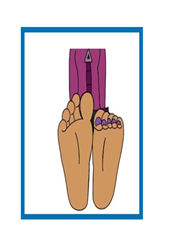
Wiggle your toes while lying in bed or whilst sitting up with your legs elevated. |
|
|
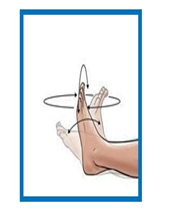
Paddle your feet up and down and circle them around and around. The circle motion should be clockwise and then anticlockwise. |
|
|
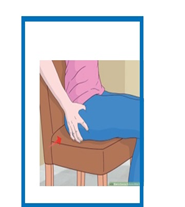
Buttocks squeezing, lying down or sitting, clench your buttock muscles together and hold for a count of 3 before relaxing. |
If you need to continue anticoagulation injections at home, your nursing team will teach you how to do this.
If you have any concerns, make sure you speak to a nurse before you leave. It’s ok to ask if you are unsure as to why you are having to continue anticoagulation at home.
If you develop any signs or symptoms of a clot when you are at home, such as: leg swelling or pain, chest pain, shortness of breath or collapse, immediately contact your GP or your nearest hospital’s emergency department.
Please ask your doctor or nurse for more information.
Remember
Most hospital patients do not develop a blood clot. The best ways to help reduce your risks are:
- Keep moving
- Drink enough fluids
- Wear stockings if advised
- Take medications as prescribed
- Seek urgent advice if you notice symptoms that might indicate a blood clot
Useful sources of information
- NHS 111 If you think you need medical help right now, 111 online can tell you what to do next.
- www.
nhs.uk - Thrombosis UK
Your questions
Always ask anything you wish, no questions are trivial or ‘silly’. The person you ask will do their best to answer but, if they don’t know, they will find someone else who is able to discuss your concerns.
Contact us
If you have any queries relating to this information, please contact the Haematology (blood) service.
About this information
Service:
Haematology (blood)
Reference:
R/010
Approval date:
15 June 2026
Review date:
1 June 2029
Click ‘show accessibility tools’ at the bottom of the page

Then click ‘select language’

Alternative formats
You can use the accessibility toolbar at the bottom of your screen to:
-
Change the text size
-
Adjust the font
-
Modify the colour contrast
-
Use the translate function
If you would like this information in another format, such as Braille, audio, or easy read, please speak to a member of staff.
You can also print as well as download as PDF using the “Print this page” button at the end of the page.
Staff will print a copy for you on request
Important note
This page provides general information only. It is developed by clinical staff and is reviewed regularly every 3 years for accuracy. For personal advice about your health, or if you have any concerns, please speak to your doctor.