

Advice after your nerve block for surgery
On this page…
Having been issued with crutches it is important to know how much weight is allowed through the affected / injured leg, if any.
- Non Weight Bearing (NWB): No weight is allowed through the affected limb. It is allowed to rest on the floor if you are sitting, but keep it off the floor whilst standing.
- Toe-touch Weight Bearing (TTWB): Only the lightest touch through the toes of the affected limb to allow better balance.
- Heel Weight bearing (HWB): Only weight through the affected legs heel is allowed when walking. A heel weight bearing shoe may also have been issued.
- Partial Weight Bearing (PWB): Approximately 50% of the body weight is permitted through the affected limb when walking.
- Weight-bear as Tolerated (WBaT) / Fully Weight bearing (FWB): The crutches are to be used for comfort. No restrictions apply.
How to Walk with Elbow Crutches:
Non Weight Bearing (NWB):
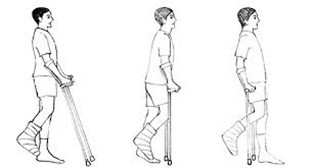
Stand with the crutches one pace forward, slightly apart and level.
Put your weight on your hands and hop to the crutches keeping your weight slightly forward.
Move the crutches on pace forward and continue.
Partial Weight Bearing (PWB) / Weight-bear as Tolerated (WBaT):
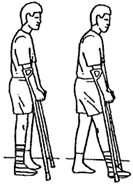
Toe-touch Weight Bearing (TTWB):
As PWB / WBaT but ensuring most of the body weight goes through the crutches when unaffected foot is off of the ground. The affected leg is only to aid balance.
Heel Weight bearing (HWB):
As PWB / WBaT but ensuring weight only goes through the heel of the affected leg.
Sitting Down:
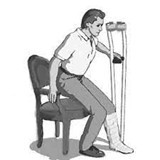
- Remove both arms from the crutches.
- Place the handles together forming a ‘H’ shape.
- Hold onto the crutches with the hand on the unaffected side placing the other hand onto the arm of the chair.
- Using the crutches and the arm of the chair for support, slowing sit down.
Standing Up:
- Holding the crutches in the ‘H’ position on your unaffected side, sit on the edge of the seat.
- Push up with one arm on the arm of the chair and the other on the crutches,
- Once standing, put your arms into the cuffs of the crutches and place the crutches on pace in front.
Stairs:
If it is essential to use the stairs and you have not been advised otherwise, try to have someone with you until you feel safe.
Hold onto at least one handrail if possible. Hold the spare crutch together with the handle of the remaining crutch.
PWB / WBaT / TTWB:
Going Up:
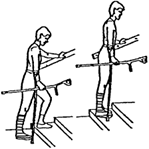
- Push up on your crutches and bring the bad / affected leg up.
- Finally moving the crutches up to the same level as you and repeat.
Going Down:
- Place your crutches onto the step below.
- Taking some of your weight through the crutches, step down with the bad / affected leg.
- Finally step down to the same level with the good / unaffected leg
Non Weight Bearing (NWB):
Going Up:
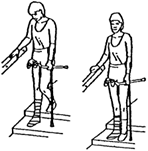
- Move your crutches up to the same level and repeat.
Going Down:
- Place your crutches onto the step below.
- Take all your weight through the crutches, hop down onto the good / unaffected leg and repeat.
Crutch Maintenance and General Advice:
- Avoid walking on wet floors, outdoor hazards such as wet leaves or ice.
- Remove obstacles such as loose rugs, draught excluders and worn floor coverings.
- Wear flat supportive shoes.
- Ensure lighting in hallways and stairs is adequate.
- Take special care if carrying a bag or similar.
- Do not store in sub-zero temperatures.
- Regularly check for slit, worn or loose ferrules; for bent or damaged tubes or cracks at the tube joints; for loose handles; for elongated adjustment holes, and return if necessary to have the elbow crutches replaced.
- To clean wipe over with a damp cloth. Do not use harsh abrasive materials.
If you have any further concerns, seek advice from your GP, Call NHS 111 or visit https:/
Contact us
If you have any queries relating to this information, please contact the Emergency department (ED) service.
About this information
Service:
Emergency department (ED)
Reference:
A/010
Approval date:
1 November 2024
Review date:
1 November 2027
Click ‘show accessibility tools’ at the bottom of the page

Then click ‘select language’

Alternative formats
You can use the accessibility toolbar at the bottom of your screen to:
-
Change the text size
-
Adjust the font
-
Modify the colour contrast
-
Use the translate function
If you would like this information in another format, such as Braille, audio, or easy read, please speak to a member of staff.
You can also print as well as download as PDF using the “Print this page” button at the end of the page.
Staff will print a copy for you on request
Important note
This page provides general information only. It is developed by clinical staff and is reviewed regularly every 3 years for accuracy. For personal advice about your health, or if you have any concerns, please speak to your doctor.