

Advice after your nerve block for surgery
On this page…
What Are Headaches?
Tension Headaches
This is the most common type of headache, and occurs more in teenagers and adults,
especially women. It can feel like a constant ache affecting both sides of the head. This is typically accompanied with the neck muscles tightening and pressure behind the eyes.
These symptoms usually last less than 15 days out of a single month and the cause is
unknown.
Tension headaches can be caused by cold or flu, stress, skipping meals, and dehydration.
Some females experience headaches as a symptom of the drop in oestrogen levels just before their periods.
Cluster Headaches
Cluster headaches are severe attacks of pain over one side of the head, often felt around the eye. These headaches are more common in men and typically occur in adulthood. They begin very quickly, and unlike some migraines, have no warning. The pain has been described as a sharp, burning or piercing sensation on one side of the head, around the eye temple and/or face.
These attacks can make you feel agitated, anxious and stressed. Cluster headaches are sometimes accompanied by a red watery eye, swelling of one eyelid, constriction of one pupil, sweating and a blocked or runny nostril.
The causes of cluster headaches is still unclear, some research suggests a genetic component, sensory triggers and smoking, whereas others suggest the cause lies in brain activity levels.
Migraine Headaches
Migraines are usually a moderate to severe ‘throbbing’ headache on one side of the head. Many people have symptoms such as feeling nauseated and being sick, as well as increased sensitivity to light and sound. Migraines are a common health condition which affects around 1:5 women and 1:15 men. They usually being occurring in the late teenage years/early adulthood.
There are several types of migraine:
- Migraine with an aura – this is when there is a specific clue that a migraine is about to begin, for example seeing flashing lights or spots.
- Migraine without an aura – this is when a migraine occurs without any warning signs.
- Migraine aura without the accompanying headache – this is also known as a silent migraine; an aura or other migraine symptoms are experienced, but a headache does not occur.
Migraines have been linked to the hormone changes occurring during menstruation. Furthermore, migraines can be triggered by stress, fatigue and the ingestion of some foods including chocolate.
Physiological Self Help for Headaches
Water
Headaches caused by dehydration may occur after sweating, especially on a hot day or after lots of physical activity! The body loses essential fluids which contribute towards its functioning. Most of the time, the amount of fluid lost is balanced through the consumption of water and fluid-rich foods. However, in some cases, the body loses water quicker than it is replenished. This can lead to
dehydration, with one of the main symptoms being a headache. Research has suggested that dehydration is a trigger for migraine, therefore, water is found to be effective in migraine frequency and severity reduction. Drinking too quickly can sometimes cause vomiting in those with dehydration, so it is best to take slow steps; sucking on an ice cube has been found useful in younger children.
Electrolyte Drinks
Electrolytes are minerals your body requires to function, your body gets them through dietary intake. Dehydration can disrupt the important balance of electrolytes in your body, so replenishing them with a low-sugar sports drink may make you begin to feel better.
Regular Meals
The body needs energy to function, most of the body’s energy comes from the consumption of carbohydrates. The body converts carbohydrates into glucose, which is then transported through the blood into areas where energy is required. The brain requires a constant supply of glucose to function. If glucose levels fall the brain is one of the first organs affected, hence why headaches can appear shortly after skipping meals.
Thus, it is important to have regular meals, meeting the ‘Healthy Living Plate’ guidelines. For some, eating regular meals means eating breakfast, having a small snack mid-morning, eating at lunch time, having a mid-afternoon snack, and eating at dinner time. Foods should be healthy and low in sugar.
Menstrual Headaches
Many headaches are linked to changing levels of hormones, specifically oestrogen and progesterone, which occur during menstruation. Whilst some birth control may worsen headaches for some women, they can actually lessen them for others. If you suffer from headaches and are using, or planning to use, a hormonal method of contraception, you should discuss this with your GP or a family planning nurse.
Changing how I cope with headaches: doing too much or too little
Pacing
Some people who suffer with headaches make the choice to do less, or even nothing. This makes sense, however, it can result in you missing out on important and fun activities. However, we know that missing out can negatively impact your mood. Some people take the opposite approach and try to stay very active on days they feel better. Again, this approach makes sense but can be counterproductive.
You may push yourself too hard and end up suffering, resulting in exhaustion and low-mood. This is referred to as a boom and bust pattern.
Pacing is a skill which enables you to consistently carry out activities without causing excessive exhaustion or inactivity. Pacing is the middle ground between doing nothing and doing too much. Over time you may notice that pacing enables you to do more.
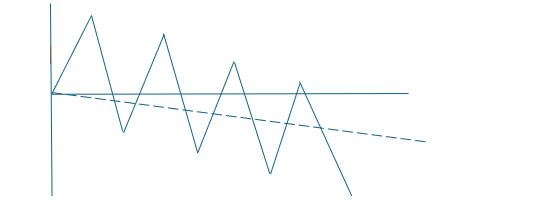
High Activity
Low Activity
Very high activity days alternating with very low activity days (solid, jagged line) will result in overall decreasing level of average activity (straight, dashed line).
- Choose an activity, such as visiting your friends or housework.
- Measure the length of time you feel physically and emotionally comfortable doing this. Do this at least 3 separate times on good and bad days.
- Take the average of these times. This helps you find your comfortable starting point to spend on these activities. Try to stick to this time, no more and no less.
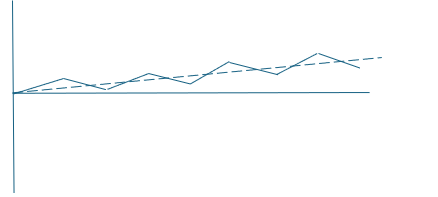
High Activity
Low Activity
Using the comfortable starting point on both good and bad days will result in overall increasing level of average activity (straight, dashed line).
Remember:
- Pacing can give you more control.
- Pacing is about judging when to stop an activity based on time and not mood.
- The comfortable starting point should be used on both good, and bad days. It is normal to find it difficult to limit yourself on good days.
- Using a comfortable starting point leads to improved tolerances and achievement.
- Taking a break is not a sign of weakness or failure. You may find it helpful to gradually build up the amounts you are able to do on the bad days.
Changing How I Cope With Headaches: The Ladder Hierarchy
Headaches can prevent us from doing things we like, such as going to the cinema, swimming, or spending time with friends. However, you cannot let them stop you, it is important that you practice fighting against avoidance! Ultimately, you need to face your fears if you want to overcome your headaches. It may seem overwhelming in the beginning, however, it is much easier if you break the process down into smaller steps.
Construct a ladder of places or situations that you avoid because of your headaches. At the top of the ladder, state the situation that you are most anxious about. At the bottom of the ladder, put places or situations you avoid , but don’t bother you as much. Give each item a rating of 0-10 according to how anxiety provoking the situation is.
Overcome your headaches by approaching these situations, starting from the bottom of the ladder. Make sure you write down what you think will happen, before approaching the task, and compare this with what actually happened.
| Situation | Anxiety (0-10) |
| Example: Going to a loud party | 10 |
| Example: Watching TV | 2 |
Calming The Body
Progressive Muscle Relaxation: See below.
Muscle tension is commonly associated with stress and anxiety, it is the bodies natural response to potentially dangerous situations. Even when there is no danger, our bodies can still respond in the same way. You may not always realise that your muscles are tense, it may be as subtle as your jaw clenching, or as obvious as your shoulders feeling really tight and hunched. PGR is a deep relaxation technique which is based upon the simple practice of tensing one muscle group at a time . This is followed by a relaxation phase with release of tension. This is very useful before bedtime.

Deep breathing: See below.
You can do this standing up, sitting in a supportive chair, or lying down comfortably. Let your breath flow deep into your stomach without forcing it. Breath in through your nose and out through your mouth. Counting to five will help you to breath calmly and regularly. Hold your breath for five seconds, as you exhale say ‘relax’. Repeat this process for 3-5 minutes.
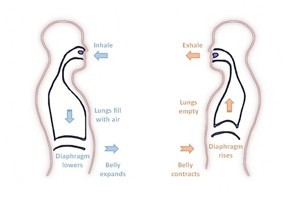
Calming The Body: Deep Breathing
During periods of anxiety, the body triggers the Fight or Flight Response. Breathing is shallow, uncontrolled, and muscles become tense. Deep breathing triggers the Relaxation Response, whereby breathing becomes deeper, controlled, slower, and the symptoms of anxiety reduce.
| Sit or lie down comfortably. Close your eyes if it makes you feel more comfortable. Place your hand on your stomach, if you breath deeply enough, you should notice your hand rising and falling with each inhalation and exhalation. Imagine a balloon blowing up in your stomach as you breathe in, and deflating as you breathe out. |
 |
1. Inhale. Breath in slowly through your nose for 4-8 seconds. |
 |
2. Pause. Hold the air in your lungs for 4-8 seconds (however long is most comfortable for you). |
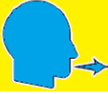 |
3. Exhale. Breath out slowly through your mouth for 4-8 seconds. |
| Repeat. Practice for at least 2 minutes. As your technique improves, practice for 5-10 minutes. |
Tips
- Slow down. The most common mistake is breathing too quickly. Count each step slowly as you do so.
- Counting your breaths takes your mind off of the source of anxiety. Counting acts as a distraction, whenever you catch your mind wandering, return to counting.
Progressive Muscle Relaxation
| 1 | Get comfortable in a distraction free environment. You can either lay down or sit upright in a chair. Closing your eyes will help you focus on the different muscle groups, but you do not have to if you don’t want to! For all steps, hold the tense position for a couple of deep breaths, or however long is comfortable for you, then relax. Repeat each step three times. |
| 2 | Draw a deep breath in through your nose and feel your abdomen rise as you fill your body with air. Then slowly exhale from your mouth, pulling your belly-button towards your spine. |
| 3 | Start with your feet. Clench your toes with your heel pressing towards the ground. Squeeze tightly for a couple of breaths and then release. It may help to say ‘relax’ whilst you release the tension. Next, flex your feet with your toes pointing towards your head. |
| 4 | Next move to your legs. Stretch your leg out, with your toes pointing towards the sky, feel the back of your leg tightening. Hold this for a couple of deep breaths and then release. Then, point your toes down into the ground with your leg straight for a couple of deep breaths. |
| 5 | Now move onto your glutes. Squeeze your buttocks muscles for a couple of deep breaths. Remember, you should only feel tension and not pain. |
| 6 | To tense your stomach and chest, pull your belly button in towards your naval as tight as you can. Breath in deeply, filling up your chest and lungs with air. |
| 7 | Next, tense your shoulder blades and back. Push your shoulder blades backwards, as if you are trying to get them to touch. This will push your chest forwards. |
| 8 | Now tense the muscles in your shoulders as you bring your shoulders up towards your ears. |
| 9 | Be careful when tensing your neck muscles! Face forward, and SLOWLY pull your head back to look up at the ceiling. |
| 10 | Squeeze your teeth together to tense your jaw. Open your mouth as wide as you can, as if you are yawning, to relax your mouth and jaw. |
| 11 | To tense your eyes and cheeks, squeeze your eyes tight shut. |
| 12 | Raise your eyebrows as high as they will go, as if you were surprised, to tense your forehead. |
| 13 | To tense your upper arms, bring your forearms up to your shoulder to ‘make a muscle’. |
| 14 | Finally, to tense your hand and forearm, make fists with both of your hands. |
Practice means progress. Only through practice can you become more aware of how your muscles respond to tensions and relaxation. Training your body to respond differently to stress is like any training – practice is the key!
Worry Tree
(Start from the top, choose Yes/No alternative and follow the right colour down)
|
What is making you worry?
|
| Can I do anything about this issue? |
| NO: | YES: |
| Try to distract myself to ease my worry. | Make a mind-map or list to show what things I can do to stop or improve my worry. |
| Can I do anything about my worry right now? | |
| NO – I can’t do anything about it at the moment. |
YES - I can.
|
| Make a mind-map or action plan of what I can do in the future to help ease my worry. | Do this now! |
| Do my best to stop worrying by distracting myself until I can action my plan. | Stop worrying and distract myself. |
Tip: make your mind-maps and lists colourful, you will be more likely to remember what you have written, and engage with the material more!
Guided Visual Imagery Relaxation: The Beach
Lay down, or sit comfortably in a quiet room. Use the deep breathing techniques you learnt earlier in this pack, close your eyes and listen to somebody read you the following script. You can also read this script to yourself. You may find it more relaxing to play an audio track of crashing waves on the beach; this can be sourced on YouTube, Spotify, and most other online music platforms.
You’re walking down a long wooden stairway to a big, beautiful beach. It is very quiet and stretches off into the distance as far as you can see. As you look down you notice that the sunlight is reflecting off of the golden sand. You step into the sand, it feels warm so you wriggle your toes. You notice the warmth from the sand between your toes and around your feet. You notice the sounds of the waves crashing and chasing you up the shore, the water sparkles like a diamond as it retreats back. The roaring sound of the waves is so soothing that you can just let go of any worries.
The ocean is a beautiful light blue, with patches of darker sapphire in the deep. As you look at these deep blue areas you notice a small sailboat on the horizon. All of these sights help you to let go of any worries and relax even more.
As you continue walking along the beach, you become aware of the fresh salty sea air. You look up take a slow deep breath in, and breath out. This breath makes you feel refreshed and relaxed. As you look up you notice two seagulls, the wind gusts and they appear to dance in graceful circles above you. It makes you wonder how it would feel if you could fly under the warm sun.
You find yourself settling into a deep state of relaxation as you walk further down the beach. You feel the sun wrap its warm arms around you, the warmth relaxes all of your muscles. You notice a beach chair as you walk down the beach, once you reach it you take a seat. Laying back in this comfortable chair makes you reflect on everything you have felt, seen and thought at this beach.
You drift into a deeper state of relaxation.
Now, feeling relaxed and at peace, you slowly rise from the beach chair and step into the warm sand to walk home. As you walk, you remember how relaxing this beach has been, and you know that you can come back to this place anytime you like. You start to climb the wooden stairs and gradually bring yourself back into the room. When you are ready, you can open your eyes.
Relaxing Safe Place Imagery
All visualisations can be strengthened by engaging all of your senses in creating your ‘Safe Place’. If you any negative thoughts enter your positive imagery, discard that image and create another one.
Get comfortable in a quiet place where you won’t be disturbed. Sit, or lie, comfortably. Take a few minutes to practice some deep breathing, become aware of any tension in your body, and release it with each breath.
Imagine a place where you can feel safe and relaxed. Your safe place can be somewhere you have been on holiday, somewhere you have seen a picture of, or a completely new place you create. Avoid using your home as your safe place.
Look around your safe place, pay attention all the colours and shapes around you. Describe what you see aloud.
Now focus on what you can hear. Listen to the sounds far away from you, and those close to you. Perhaps you hear is silence. You may hear the sound of running water, or the crunch of leaves under your feet.
Now focus on any skin sensations. Notice the feel of the ground beneath your feet, or whatever is supporting you in this place. Pay attention to the temperature and direction of the wind, and anything else you can feel.
Take a deep breath in. Place your hand on your stomach, and imagine a balloon inflating in your stomach. Can you notice any smells there? Maybe you can taste the salty sea air as you inhale?
Pay attention to all of these sensations whilst you spend time relaxing in your safe place.
Whilst you’re in your safe place, give it a name that you can use to bring that image back at any time.
You can choose to stay for a while, enjoying the calmness and tranquillity. You can leave when you are ready by slowly opening your eyes and bringing yourself back to alertness in the present.
Develop Coping Thoughts/Positive Self-Talk
Positive statement encourage us and help us cope through distressing times. We can act as our own coach by saying these encouraging thigs to ourselves. Some examples include:
“I can do this.”
“I can cope.”
“Keep calm and carry on.”
“Thoughts are just thoughts – they are not necessarily fact.”
“It is okay to feel this way, it is a normal reaction.”
“This is difficult and painful, but it is only temporary.”
“This wont last forever.”
Activity:
| Situation | Coping Thought/Positive Statement |
| Example: I have started in a new school. I do not know anybody here yet. I am worried about speaking to new people and making new friends. |
It is okay, everybody experiences first day nerves. I will make friends soon enough! |
| I have exams in the next couple of weeks, they are really important. I am worried I will miss an exam, or do badly in them. | |
| My best friend is has a contagious illness, she wants me to visit her. I have anxiety about becoming unwell. | |
| I have to talk to my whole class to present a piece of work. I can feel myself getting hot, my heart rate increasing, and my mouth getting dry. |
Self-Soothing
5, 4, 3, 2, 1 Grounding Technique
This approach explores your five senses to help keep you grounded in the present. This is a calming technique that can help you get through periods of anxiety, or headaches. It can be done independently, making it useful for when you are alone.
Take a deep belly breath to begin. Imagine a balloon in your stomach filling up with air as you breath in.
LOOK: Look around for 5 things that you can see, and say them out loud. For example, you could say, I see the TV, I see the pencil case, I see a vase of flowers.
FEEL: Pay attention to your body and think of 4 things that you can feel, and say them out loud. For example, you could say, I feel my feet warm in my slippers, I feel the grass beneath my feet, or I feel the beanbag I am sitting on.
LISTEN: Listen for 3 sounds. It could be the sound of traffic outside, the sound of typing or the sound of your tummy rumbling. Say the three things out loud.
SMELL: Say 2 things you can smell. If you’re allowed to, it’s okay to move to another spot and sniff something. If you can’t smell anything at the moment or you can’t move, then name your 2 favourite smells. You may say, I can smell dinner cooking, or I can smell perfume.
TASTE: Say 1 thing you can taste. It may be the toothpaste from brushing your teeth, or sweetness from fruit. If you can’t taste anything, then say your favourite thing to taste.
Take another deep belly breath to end.
Supporting young children and teenagers suffering from headaches
It can be difficult to see a child/teenager in pain. However, as an adult there are ways in which you can help improve their ability to cope with pain:
- Reassurance – Receiving a diagnosis from a GP means that more information can be provided, and a treatment plan can be formulated. This is reassurance that the child/teenager is experiencing something real, and that healthcare professionals are available for support.
- Record – It is important to keep a headache diary. This will allow doctors to make a firm diagnosis and determine if any treatments are working. Another benefit of a headache diary is that it helps to identify triggers, patterns, and warning signs of headaches. This can be very helpful to give to schools so they can act quickly and appropriately. Please ask your doctor for a headache diary if you plan to see them again, and think that this would be helpful.
- Observation – Watch your child/teenager, you may be able to sense when they are about to have a headache attack. You may suspect the onset of an attack by recognising certain warning signs which can occur 2-48 hours prior. These may include fatigue and yawning, muscular pain, a pale complexion (looking ‘washed out’), they are more quiet and irritable than usual, confusion, and food cravings.
- Encourage – The child/teenager may feel more confident in their ability to cope with their condition if they try to manage it. Your role is to provide positive encouragement that they can cope with, and manage, their headaches, as well as utilise strategies in this pack.
- Support – Headaches may affect the child/teenager’s ability to complete homework, coursework, and revision. Offering support at home with studies may relieve some of stress, in turn decreasing the chance of reoccurring headaches . Provide this information sheet to their school/college so they can provide extra support where necessary.
Online Support
Apps:
Mindfulness and Sleep:https:/
Meditation and Sleep:https://www.calm.com/
Meditation: https://www.headspace.com/kids
Websites:
Resources for Teachers, Parents, Carers, and Children: http:/
Free Online Counselling: https:/
Mindful Breathing: www.
Mindful Activity: www.
Relaxation Techniques: www.
Relaxing Imagery: www.
Supporting Sleep: www.
Headache Information: https:/
Social Anxiety UK: www.
Contact us
If you have any queries relating to this information, please contact the Paediatrics service.
About this information
Service:
Paediatrics
Reference:
P/107
Approval date:
1 July 2025
Review date:
1 July 2028
Click ‘show accessibility tools’ at the bottom of the page

Then click ‘select language’

Alternative formats
You can use the accessibility toolbar at the bottom of your screen to:
-
Change the text size
-
Adjust the font
-
Modify the colour contrast
-
Use the translate function
If you would like this information in another format, such as Braille, audio, or easy read, please speak to a member of staff.
You can also print as well as download as PDF using the “Print this page” button at the end of the page.
Staff will print a copy for you on request
Important note
This page provides general information only. It is developed by clinical staff and is reviewed regularly every 3 years for accuracy. For personal advice about your health, or if you have any concerns, please speak to your doctor.