

Advice after your nerve block for surgery
On this page…
This leaflet explains what RPD is and answers questions you may have after your 20 week ultrasound scan.
The kidneys are part of the urinary system (see diagram). You usually have two kidneys - one on the right and one on the left side of your body.
Each kidney has two main parts:
- the first produces urine.
- the second part transfers urine from the kidneys to the bladder. This part is called the renal pelvis.
Urine flows from the renal pelvis down a tube called the ureter into the bladder.
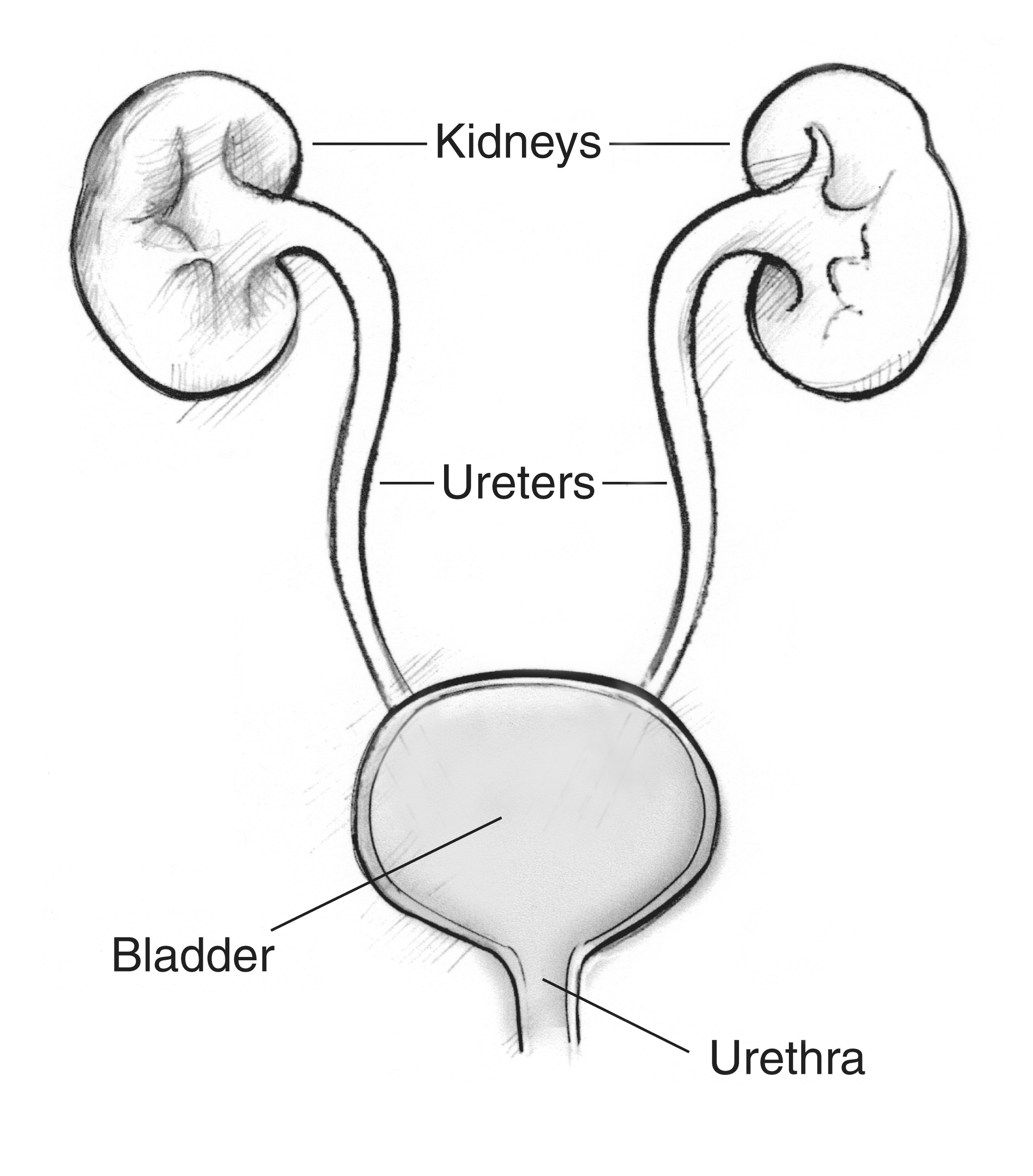
image: National Institute of Diabetes and Digestive and Kidney Diseases, National Institutes of Health.
During your 20-week ultrasound scan, the sonographer measures the size of the renal pelvis.
- A normal measurement is 0–7mm before 24 weeks and less than 10mm after 28 weeks.
- If the measurement is bigger than this, it is called renal pelvis dilatation (RPD) or hydronephrosis.
One or both kidneys can be affected, and the size can change during pregnancy.
In many cases, RPD is temporary. The kidney may look a little bigger for a short time during pregnancy and then return to normal on its own. The size can also change through the pregnancy, so your doctor might recommend follow-up scans.
Normal things can also affect how the kidney looks during the scan. For example, if the baby’s bladder is full, urine can collect in the kidney for a little while, making it look bigger. This can make measuring it harder.
In most cases, RPD doesn’t cause any problems and gets better on its own without any treatment. In a small number of cases:
- urine might flow backward from the bladder up toward the kidneys. This is called vesicoureteral reflux.
- very rarely, there may be a blockage in the urinary tract that makes it harder for urine to drain properly.
Your healthcare team will keep checking the scans and will let you know if any other tests are needed.
- If the measurement is less than 10mm, you will have another scan at about 32 weeks. By then, the RPD may have gone away.
- If the measurement is more than 10mm, you will have another scan with a fetal medicine doctor, and a follow-up after your baby is born.
The fetal medicine doctor will inform the paediatricians, so they are aware before your baby is born.
During pregnancy
There is no treatment needed before your baby is born. RPD should not affect your baby’s growth or development.
After birth
The midwives will tell the neonatal team about the RPD seen on your scan. Your baby will have a routine newborn check (NIPE), and the scan results will be reviewed. If needed, more tests and care will be arranged after birth.
- Your baby may be given a small dose of antibiotics to stop urinary infections.
- Your baby may need more scans, depending on the last measurement before birth.
- A blood test may be done to check how the kidneys are working.
- If another ultrasound is needed, it will be arranged, and you will be told if more follow-up is required.
- If scans show the kidney is still enlarged or getting bigger, your baby may need more tests or treatment. You might also see a paediatric urologist (a doctor who looks after children’s kidneys and bladder).
Contact us
If you have any queries relating to this information, please contact the Maternity service.
About this information
Service:
Maternity
Reference:
M/022
Approval date:
1 March 2026
Review date:
1 March 2029
Click ‘show accessibility tools’ at the bottom of the page

Then click ‘select language’

Alternative formats
You can use the accessibility toolbar at the bottom of your screen to:
-
Change the text size
-
Adjust the font
-
Modify the colour contrast
-
Use the translate function
If you would like this information in another format, such as Braille, audio, or easy read, please speak to a member of staff.
You can also print as well as download as PDF using the “Print this page” button at the end of the page.
Staff will print a copy for you on request
Important note
This page provides general information only. It is developed by clinical staff and is reviewed regularly every 3 years for accuracy. For personal advice about your health, or if you have any concerns, please speak to your doctor.