

Advice after your nerve block for surgery
On this page…
Going Home - What to expect?
You may feel tired for a few days after surgery. Some people also feel drowsy or have slower reactions. You might find it hard to concentrate, remember things, or finish complex tasks.
Sleep can be disrupted. To help, practise good sleep habits.
Balance rest and activity. This will help you feel in control and support your mental well-being.
Everyone recovers differently. Set realistic expectations about pain, recovery time, mobility, and wound healing.
Managing your pain
Expect moderate pain after surgery, especially when moving. This is normal even if you take pain relief. As you get stronger and more active, start reducing opioid painkillers first (such as dihydrocodeine, tramadol, or oxycodone). Read the booklet “Managing Pain After Your Surgery” for guidance.
Key Tips:
- Stay active
- Manage your pain killers safely (as prescribed)
- Control swelling and bruising with ice therapy and elevation
- Learn to pace your activity
- Use distraction techniques Wound and dressing care
When should I contact the team?
- If the dressing has moved, is leaking or looks like picture 4
- If the surrounding skin has become red, spreading outwards away from the wound
- If there is in an increase in pain or odour
- If blisters develop around your surgery site
When to change/not change your dressing:
You DO NOT NEED to change your dressing if it looks like this: 1,2,3
1. 2. 3.
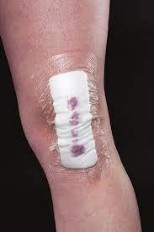
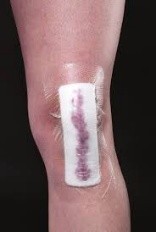
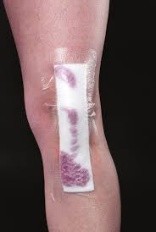
Your dressing WILL NEED to be changed if it looks like this:
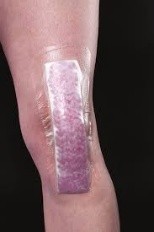
Blisters are not uncommon and they are generally associated with severe swelling.
If you develop blisters after discharge, contact our department for advice.
Can I shower with the dressing?
Yes. It is shower proof. Keep it as dry as possible. If skin gets too moist, the dressing may fall off. Face away from the shower to avoid direct water. Do not bathe or soak the dressing.
When should my dressing be changed?
Your wound takes about 14 days to heal. Keep the dressing in place until your scheduled change. Do not remove it early. It is normal for blood or fluid to leak for up to 72 hours after surgery, especially with movement. You will have a wound check in our Nurse-Led Clinic about 2 weeks after surgery.
Negative pressure wound therapy
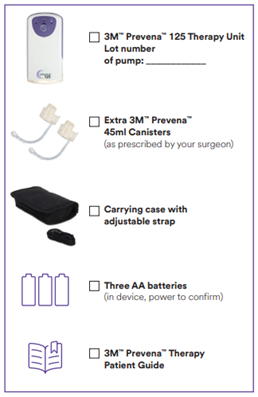
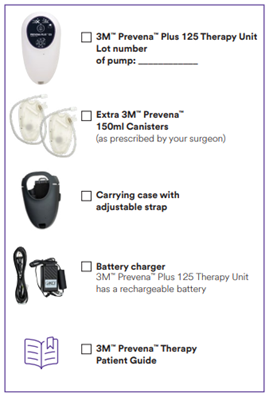
Some patients need negative pressure wound therapy to help healing in complex wounds or when there are concerns about bleeding or poor blood supply. Read the leaflet on Prevena or Avelle Dressing for guidance.
• Prevena Dressing
• Avelle dressing
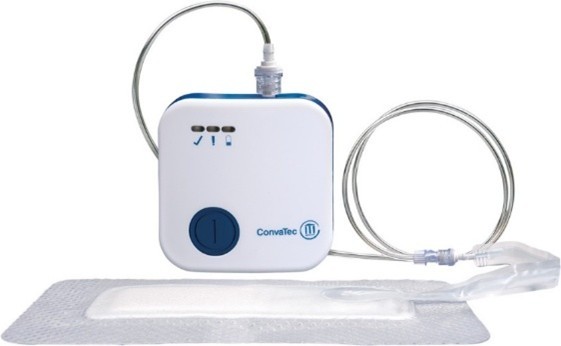
If you go home with one of these devices, you will have a follow-up at the Nurse-Led Clinic at Heatherwood Hospital about 1 week after surgery.
If your surgery is at the weekend, your appointment will be booked during the following week.
Both of the Prevena dressing Systems will stop working after 7 days. If the device automatically switches off on day 7, please turn it back on again until until you see the team.
The Avelle dressing can be used for more than 7 days if necessary – this will be agreed by the healthcare professional.
Swelling and bruising
Swelling often increases in the first few days and weeks. It may last 3–6 months. It is usually worse in the evening and better in the morning. If you had leg surgery, place a pillow under your foot or raise the end of your mattress to reduce swelling at night.
Cold therapy
Apply cold packs 5–6 times a day for 20 minutes in the first few weeks. Avoid heat as it increases inflammation.
Elevation
If you had knee surgery, keep your leg straight when elevating. Do not put a pillow behind your knee.
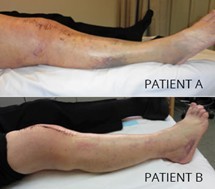
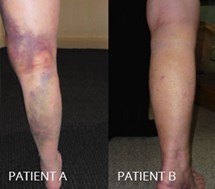
Bruising is normal and may appear a few days after surgery. It can look severe but is not harmful. Blood thinners can make bruising worse. Bruising may spread down your limb and change colour before fading over several weeks.
See examples below of different, but normal post op bruising patterns:
Tips to reduce bruising:
- Cold therapy
- Elevation
- Frequent movement
Both swelling and bruising should improve slowly. If they worsen and limit your recovery, it may signal a complication. Watch for signs like fever, new and severe pain, spreading redness, or loss of sensation/numbness.
Check the leaflets provided on discharge:
- Monitoring Surgical Wounds for Infection
- Preventing Hospital-Associated Blood Clots
Keep Moving
Moving often after surgery helps prevent complications such as:
- Muscle loss and stiffness
- Pressure sores (skin damage from immobility)
- Bladder and bowel problems
- Chest infections
- Blood clots
Take your painkillers as prescribed. They help you stay mobile. Expect stiffness and discomfort in the morning, especially when you first stand after leg surgery. The more you move, the less stiff and painful you will feel. However, too much movement can increase swelling, bruising, and wound discharge. Balance movement and rest. Both are important for recovery.
Tip: “Move little and often.” Read the Post-op Exercises Leaflet or visit our website
Constipation
Constipation is common after surgery. Causes include anaesthetic, painkillers, poor diet, and dehydration.
To prevent constipation:
- Take prescribed laxatives
- Drink 1.5–2 litres of water daily (unless told otherwise). Avoid alcohol
- Eat fibre-rich foods: whole grains, bran, oats, leafy greens, apples, apricots, grapes, raisins, raspberries, strawberries. Avoid legumes and bananas
- Walk every hour for 5–10 minutes
When to worry:
Constipation lasting more than 72 hours, painful and distended lower abdomen, nausea, vomiting, difficulty passing gas or inability to keep food or fluids down despite doing all the advice above may signal a rare complication called post-operative ileus. If this happens, go to your nearest Emergency Department immediately.
Urinary retention
Urinary retention means you cannot pass urine even with a full bladder. Some patients go home with a catheter for a few days or weeks. The team will give you a removal plan.
Signs of urinary retention:
- Difficulty or inability to pass urine
- Bladder pain or spasms
- Abdominal swelling
- Not everyone gets these symptoms. Pay attention to how often you urinate and any changes in colour or smell.
Key tips:
- Drink 2–3 litres of fluid daily (unless told otherwise)
- Avoid constipation
- Empty your bladder regularly
- If you struggle to urinate, try relaxing or take a warm bath/shower
Going home with a urinary catheter:
There is a small risk of infection after catheter removal. Contact Heatherwood Hospital Urology Centre (0300 614 4041 , Mon–Fri 8am–4pm) if you have:
- Discomfort, bleeding, or trouble passing urine
- Fever or cloudy, smelly urine
Out of hours, call 111 or go to the Emergency Department.
Important: Do not go more than 6 hours without passing urine or draining the catheter. If you cannot urinate and have pain or swelling, go to the Emergency Department immediately.
'Red flags' after surgery
Call emergency services or go to A&E if you have:
- Fever above 38°C
- Sudden chest pain or palpitations
- Sudden shortness of breath
- Coughing up blood
- Fainting or collapse
- Head injury after a fall (especially if on blood thinners)
Follow-ups
You will usually have an appointment about 2 weeks after surgery. Check MyFrimleyHealthRecord.
Contacts:
- Nurse Led Clinic for Wound Check (Heatherwood Hospital): 0300 614 4065 / 0300 614 9269 (Mon–Fri, 8am–4pm)
- Physiotherapy Team: 0300 614 0540 (Mon–Fri, 8:30am–4:30pm)
- Most patients are seen 2–3 weeks after surgery, but this depends on clinic availability and your address. You will be contacted with details.
Surgical Team
The timing of follow-up appointments can vary, usually 6–12 weeks after surgery. Some patients may need earlier review or later checks (up to 12 months).
Not all surgical procedures or patients will have clinician follow up after surgery. If you have any questions or concerns, a follow-up can be arranged. This is called Patient Initiated Follow-Up (PIFU).
Others
You may be advised on discharge to contact your GP for further blood tests or attend a a follow-up with a different team/speciality, according to your needs.
Other sources of information
MyFrimleyHealth Record is an online platform that provides personalised and secure online access to patient medical records.
For assistance, contact MyFrimleyHealth Record helpdesk on 0300 6141 360 or via email fhft.
Contact details
| NHS Outpatients appointments |
Frimley Park Hospital Heatherwood & Wexham Park Hospital 0300 614 7919 |
Mon – Fri 08.30am to 16.30pm |
Reschedules Cancellations Appointment Details |
| Therapy outpatient appointments | 0300 614 0540 | Mon – Fri 08.30am to 16.30pm |
Reschedules Cancellations Appointment Details |
| Private Outpatients appointments | 0300 614 4107 | Mon – Fri 08.00am to 18.00pm |
Reschedules Cancellations Appointment Details |
| Nurse Led Clinic | 0300 614 4065 0300 614 9269 |
Mon – Fri 08.00am to 16.00pm |
Wound / dressing concerns |
| Pre-operative assessment | 0300 614 4121 0300 614 4122 |
Mon – Fri 08.00am to 16.00pm |
Pre-operative questions / concerns |
| Day Surgery Unit (DSU) | 0300 614 4130 0300 614 4131 |
Mon – Sat 7am to 9pm |
Discharged from DSU General Advice |
| Treetops Unit | 0300 614 4175 0300 614 4176 |
24/7 | Discharged from Treetops covers out of hours |
| Parkside Unit (Private) | 0300 614 4175 0300 614 4186 |
Variable | Private patients General advice |
| Joint Replacement Specialist | 0300 614 4159 07789 927 177 |
Mon – Fri 7am to 3pm |
Joint Replacement advice General Advice |
Hospital Transport
You can visit:
https:/
In the event of any issues with transport please contact our Patient Transport Liaison Officer:
For Wexham and Heatherwood sites: 07822 872900
For Frimley Park Hospital: 07822 872899
Contact us
If you have any queries relating to this information, please contact the Orthopaedics service.
About this information
Service:
Orthopaedics
Reference:
Y/062
Approval date:
1 November 2025
Review date:
1 November 2028
Click ‘show accessibility tools’ at the bottom of the page

Then click ‘select language’

Alternative formats
You can use the accessibility toolbar at the bottom of your screen to:
-
Change the text size
-
Adjust the font
-
Modify the colour contrast
-
Use the translate function
If you would like this information in another format, such as Braille, audio, or easy read, please speak to a member of staff.
You can also print as well as download as PDF using the “Print this page” button at the end of the page.
Staff will print a copy for you on request
Important note
This page provides general information only. It is developed by clinical staff and is reviewed regularly every 3 years for accuracy. For personal advice about your health, or if you have any concerns, please speak to your doctor.