

Advice after your nerve block for surgery
On this page…
The below information is from an external website. Please use the link below to view it. If you have any issues accessing it, please do not hesitate to contact us.

If the exercises and advice do not help, or you remain concerned, please make an appointment with your Doctor.
Exercises to help with Osgood Schlatters Disease:
- The following exercises will help improve the flexibility of your muscles and help with the problems you are experiencing.
- Please carry out your exercises twice a day.
- You can chose to do the lying or standing exercises. You don’t need to do both.
- Please make sure you warm up and stretch before sport.
- Please make sure you cool down and stretch after sport.
|
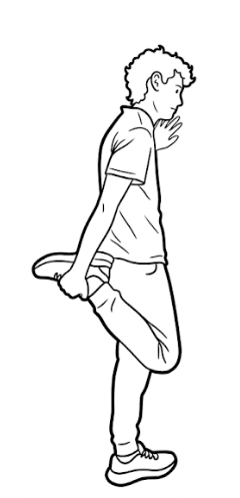
Quadricep muscle stretches (Choose standing or lying) Standing |
Stand holding onto a support Hold for 30 seconds |
|
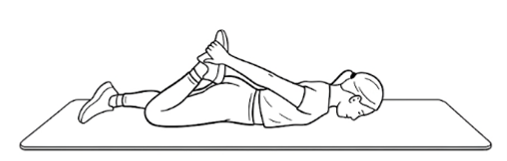
| Lying |
Lie on your front Hold for 30 seconds |
|
|
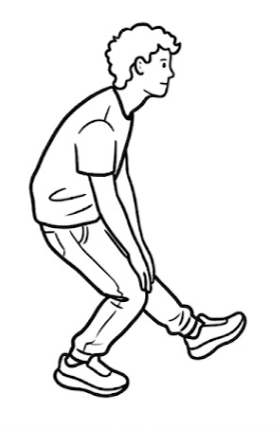
Hamstring muscle stretches (Choose standing or lying): Standing |
Stand with your leg to be stretched straight out in front of you Hold for 30 seconds |
|
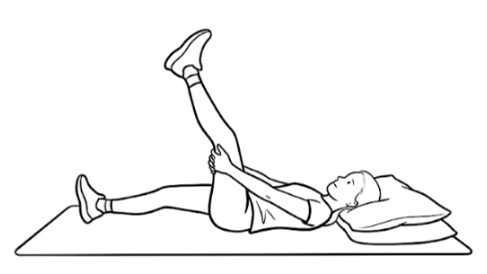
| Lying |
Lie on your back Hold for 30 seconds |
|
|
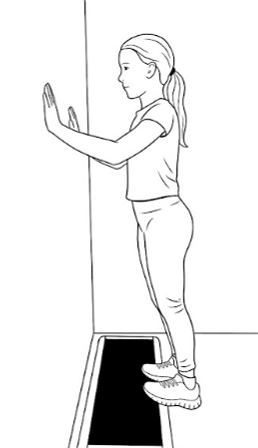
Calf muscle stretches (Please choose 1) Calf step stretch |
Stand on a step with both heels over the edge (hold onto a support) Hold for 30 seconds |
|
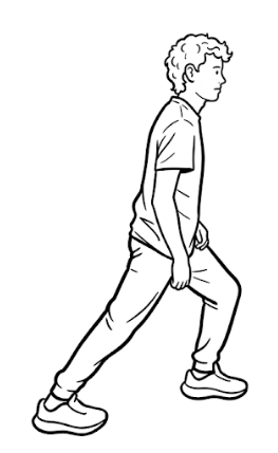
| Calf standing stretch |
Stand with one foot in front of the other Hold for 30 seconds |
|
Additional Resources:
Multiple languages available accessing the link below:
Parent and Carer Leaflets (Translated) | The Association of Paediatric Chartered Physiotherapists
Contact us
If you have any queries relating to this information, please contact the Physiotherapy service.
About this information
Service:
Physiotherapy
Reference:
PT/007
Approval date:
1 April 2026
Review date:
1 April 2029
Click ‘show accessibility tools’ at the bottom of the page

Then click ‘select language’

Alternative formats
You can use the accessibility toolbar at the bottom of your screen to:
-
Change the text size
-
Adjust the font
-
Modify the colour contrast
-
Use the translate function
If you would like this information in another format, such as Braille, audio, or easy read, please speak to a member of staff.
You can also print as well as download as PDF using the “Print this page” button at the end of the page.
Staff will print a copy for you on request
Important note
This page provides general information only. It is developed by clinical staff and is reviewed regularly every 3 years for accuracy. For personal advice about your health, or if you have any concerns, please speak to your doctor.