

Advice after your nerve block for surgery
On this page…
What is a guillotine amputation?
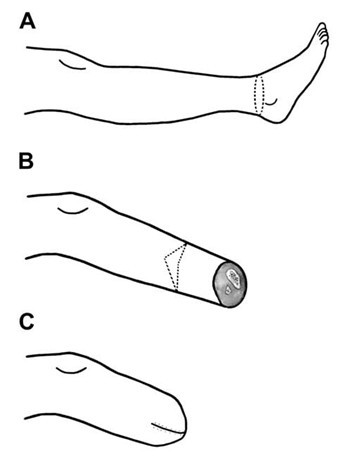
The first stage of a two stage operation for an amputation
(A-B shown in images).
A cut is made at the narrowest part of the ankle (see the image below), to remove the foot.
The end of the stump is covered with a dressing.
A second surgery will then be completed to close the wound (B-C in images).
Why do I need a guillotine amputation?
It is usually a life saving surgery due to:
- severe bacterial infection of the affected tissue
- severe or sudden onset of infection in the bone
- foot complications due to diabetes and poor blood flow to the foot
What happens after a guillotine amputation?
Your stump will be dressed and monitored for bleeding, swelling, infection, or any blood flow restriction for several days. You will begin therapy and gentle exercises soon after the surgery to strengthen the muscles and prevent joint tightening.
Post operative restrictions:
It is usually recommended you are on bed rest after a guillotine amputation until you have your second operation to close the wound. The surgeons will guide your therapy team on this. If it is appropriate to get out of bed, your therapy team will help you do this. You will not be able to put any weight through your amputated leg.
The therapy team will see you day one post amputation to teach you exercises to complete in bed. This will include education around joint tightening and swelling management.
If your therapy team have been unable to see you prior to your first surgery, they will see you to explain everything about the second stage of amputation surgery, your admission to hospital and your rehabilitation process.
Contact us
If you have any queries relating to this information, please contact the Physiotherapy service.
About this information
Service:
Physiotherapy
Reference:
BB/102
Approval date:
10 January 2025
Review date:
10 January 2028
Click ‘show accessibility tools’ at the bottom of the page

Then click ‘select language’

Alternative formats
You can use the accessibility toolbar at the bottom of your screen to:
-
Change the text size
-
Adjust the font
-
Modify the colour contrast
-
Use the translate function
If you would like this information in another format, such as Braille, audio, or easy read, please speak to a member of staff.
You can also print as well as download as PDF using the “Print this page” button at the end of the page.
Staff will print a copy for you on request
Important note
This page provides general information only. It is developed by clinical staff and is reviewed regularly every 3 years for accuracy. For personal advice about your health, or if you have any concerns, please speak to your doctor.