

Advice after your nerve block for surgery
On this page…
This page aims to explain the procedure you will have whilst in hospital, it serves as a guide. If any questions arise from reading this information, please speak to one of the Kidney Cancer Nurse Specialists.
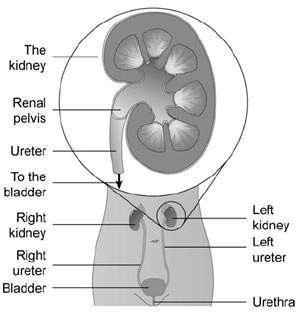
The kidneys are a pair of organs located at the back of the abdomen which filter blood to remove waste products producing urine. The urine is carried from each kidney to the bladder via a tube called the ureter. When the bladder is full the urine passes out of the body through a tube called the urethra. The urethra opens immediately in front of the vagina in women and at the tip of the penis in men.
If you are diagnosed with a kidney lump (or tumour) the following information is important to know:
• Localisation of the tumour
• The estimated size
• Your age and co-morbidities
• Your current medications
• Your current kidney function
• Previous surgery on your abdomen / kidneys
• Involvement of renal vein, adrenal gland
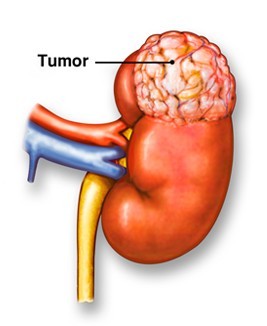
After a lesion in a kidney has been identified, usually on a CT scan, the scans are reviewed in the Specialist Renal Multidisciplinary Team Meeting and the specialist team will make recommendations of how best to manage the lesion.
There are several factors which are considered when choosing the right management plan for each patient such as:
• The patients age and co-morbidities
• The estimated size of the tumour
• Your current kidney function
Biopsy of the renal lesion is one way of gaining a bit more information about the lesion and can help the renal cancer consultants advise you on the most appropriate treatment options of the renal lesion.
What is a Biopsy?
A biopsy is a way of taking a small piece of tissue out of your body using only a tiny cut in the skin and a thin needle. The biopsy will then be examined under a microscope by a Pathologist (an expert in making a diagnosis from tissue samples). We will use one or more types of radiology method to guide the needle into the correct place in the body.
The biopsy may therefore take place in either the CT or ultrasound department within radiology.
The biopsy will be performed by a Radiologist (a Doctor specialising in medical imaging), who will be assisted by a Radiographer and / or a Radiology Nurse.
Before your Appointment
Please let us know if you are taking any medication which thins the blood ability to e.g. Warfarin, Clopidigrel, or Apixaban
What to Bring with You
You will usually be admitted for the procedure as a day case. You will be told where to go on either your appointment letter or by telephone. Occasionally it is necessary for patients to stay overnight in hospital after the biopsy, therefore please bring an overnight bag with you.
Please bring any medication sprays or inhalers that you take and a list of any regular medications.
Eating and Drinking
You should have nothing to eat for 6 hours prior to the time of your procedure. You can continue to drink clear fluids (water) up to 2 hours prior to the procedure but then nothing should be consumed.
The Procedure
You will need a cannula (small tube) inserted into a vein in your arm to allow access for fluids and for administering medication.
You will be asked to change into a hospital gown. The porters will collect you from the ward on your bed and bring you to the radiology department for the procedure.
The procedure will be explained to you by the radiologist, and you will be able to ask any further questions that you may have.
You will be asked to lie on the examination table. It is important that you stay very still until the procedure is over. If you are uncomfortable, please let the doctor know.
The ultrasound or CT scanner will be used during the biopsy.
Your skin will be numbed with local anaesthetic, this may sting at first, but soon after, the skin and deeper tissues should feel numb.
The radiologist will insert the thin biopsy needle whilst looking at the images to ensure accuracy of positioning. You may be aware of a pushing sensation as the needle is positioned. If the procedure becomes painful, please let the radiologist know, as they may give you more local anaesthetic.
Once in place, the biopsy needle often makes a loud clicking noise when the biopsy is taken, more than one sample may be taken.
When the procedure is finished, a small dressing will be placed to cover the incision, and you will be taken back to the ward.
Risks
As with any procedure or operation, complications are possible. The most common risks and complications include:
- Bleeding - biopsy carries a small risk of bleeding. On rare occasions, this may become severe, which may require further intervention or a blood transfusion.
- Infection - which may require treatment with antibiotics.
- Damage to underlying tissues - when the needle passes through the body.
- Inconclusive results - the piece of tissue which has been taken may not contain enough abnormal cells for the Pathologist to make a definite diagnosis.
After the Procedure
The nursing team will carry out regular observations, including taking your pulse, blood pressure and temperature. You will be asked to stay in bed for at least four hours. You should tell the nurses if you feel worsening pain or you develop a temperature.
You should drink plenty of fluids and eat normally.
Most patients are discharged home after 6-8 hours, it’s recommended that a suitable adult stays with you overnight.
There may be soreness and bruising around the biopsy site.
If you develop any of the following:
• Smelly cloudy urine
• Blood in the urine
• Fever
• Pain
• Shivering
• Shortness of breath
• Frequency of passing urine
• Burning sensation when passing urine
• Feeling unwell
• Red, inflamed, or oozing from biopsy site.
Please seek advice from the Kidney Cancer Nurse Specialist in normal office hours.
If out of hours / weekends, please call the Surgical Assessment Unit (SAU) helpline on 0300 613 6960.
In an emergency dial 111 or attend your local A&E department.
The Results & Follow-up
The results of your biopsy usually take approximately 2-3 weeks. They will be reviewed in the Specialist Renal Multidisciplinary Team Meeting (MDT) and then we will be in touch with the MDT’s recommendations.
Useful Telephone Numbers/contacts
Sister Jo Oakley Kidney Cancer CNS 0300 613 2426
Sister Kate Brown Kidney Cancer CNS 0300 613 5804
FRCC Senior Clinical Admin Officer 0300 613 4450
Appointments 0300 613 4201
Radiology Department 0300 613 4140
Pre-Operative Department 0300 613 2157
Contact us
If you have any queries relating to this information, please contact the Urology service.
About this information
Service:
Urology
Reference:
Z/053
Approval date:
1 August 2025
Review date:
1 August 2028
Click ‘show accessibility tools’ at the bottom of the page

Then click ‘select language’

Alternative formats
You can use the accessibility toolbar at the bottom of your screen to:
-
Change the text size
-
Adjust the font
-
Modify the colour contrast
-
Use the translate function
If you would like this information in another format, such as Braille, audio, or easy read, please speak to a member of staff.
You can also print as well as download as PDF using the “Print this page” button at the end of the page.
Staff will print a copy for you on request
Important note
This page provides general information only. It is developed by clinical staff and is reviewed regularly every 3 years for accuracy. For personal advice about your health, or if you have any concerns, please speak to your doctor.