

Advice after your nerve block for surgery
On this page…
Anatomy of the Spine
The spine consists of 33 bones, or vertebrae, 24 of which are separate bones allowing movement and 9 of which are fused together. The 5 sections of the spine or vertebral column are the cervical, thoracic, lumbar and sacrum, which includes the coccyx.
- The vertebrae are named by the first letter of the region.
- Cervical spine makes up the neck and has 7 vertebrae. The top two bones are known as the atlas and axis and are different from the others to allow rotation of the skull as well as forwards and backwards. (C1-C7)
- Thoracic spine has 12 vertebrae which the ribs are attached to. They are larger than the cervical vertebrae as they have to support more of the bodies’ weight. (T1-T12)
- Lumbar spine has 5 vertebrae which make up the lower back. (L1-L5)
- Sacrum consists of 5 bones which are fused or stuck together, and the coccyx is made up of 4 tiny bones and used to be a tail. (S1-S5, Coccyx)
Intervertebral Discs
Each vertebra is separated by intervertebral discs which are flexible cartilage discs. These allow movement in the spine and have a load sharing function as well.
Symptoms and Management
It is important to continue with adequate analgesia in order for you to continue with your rehabilitation and physiotherapy exercises.
If the pain in your spine increases and it is affecting your function, please seek advice from the orthopaedic on-call team.
A common side effect of analgesia is constipation. Please ensure you take a laxative from over the counter if your bowel habit reduces.
If you have NEW symptoms related to spinal cord damage please attend the emergency department as soon as possible.
Symptoms include:
- shooting pains down arms or legs
- pins and needles in fingers or feet
- burning/stabbing sensation in any limbs
- numbness in arms/legs
- numbness around anus,
- bowel/bladder incontinence
- not being able to empty bowel/bladder
Contact details
For queries regarding your collar/brace, contact the Plaster Room on 0300 615 4058
Opening hours:
Monday, Tuesday, Thursday and Friday 9.00am – 5.00pm.
Wednesday and Saturday 9.00am – 1.00pm
On call orthopaedic team (SHO) via main switchboard
Trauma Nurse Practitioner (7.00am – 5.00pm, Monday-
Friday) 07767 001952 and 07341509623
Also encouraged in patients with non-specific back pain where the following exercises have proved useful.
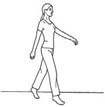 |
Walking is good exercise for your back. Aim to go for a 5-10 mins walk daily and gradually increase it. Aiming for 30 mins by week 6. You may need to pace this activity initially. Taking regular rest breaks when needed, but you will improve. |
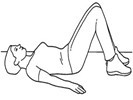 |
Pelvic tilts - Lying on your back with knees bent and arms by your side. Tighten your stomach muscles, Press the small of your back against the floor letting your bottom rise. Hold 5 secs then relax. Repeat 10 times, |
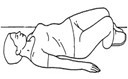 |
Knee rolls - Lying on your back with knees bent. Slowly roll your knees from side to side keeping your upper trunk still. |
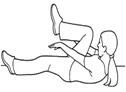 |
Knee hugs - Lying on your back with knees bent. Bring one knee up and pull it into your chest so you are hugging your knee. Return to starting position and repeat with the other leg. |
Non-operative Management
Following a trauma to your spine you may not require surgery, but the following two pieces of equipment may assist you in supporting your back and in pain management. A brace/collar will also be advised to ensure your spine stays in the correct position to heal effectively
TLSO (Thoracic Lumbar Sacral Orthosis)
This is a brace designed to protect the area of spine that is damaged and to prevent further deterioration. The brace works by having 3 points of pressure which will stop you bending forward at the level of your injury.
Cervical Hard Collar
Also known as a neck brace, this is a medical device used to support a person’s neck. The cervical collar only stabilizes the top seven vertebrae, C1-C7. It is used to help realign the spinal cord and relieve pain.
Operations
In certain situations, an operation may be suggested.
- Spinal operations may be required to prevent pain symptoms from getting worse.
- If the spinal cord or the nerves which runs down the spinal canal (see diagram above) has been compressed by disc or bone, nerve damage can occur.
- If a fracture of the spinal bones causes the spine to become unstable or puts the spinal cord at risk, then an operation maybe considered.
If you require surgery, you will be asked not to eat or drink anything (“nil by mouth”) for 6 hours prior to the operation. This may be longer as times of surgery may change on the day.
It is common for patients to be nil by mouth from 2.00am if they will be on the morning operating list. Further detail will be provided on the day about the latest time you can drink water.
It is important to continue your current medication regimen. However, the following medicines must not be taken the day of surgery:
- Warfarin (or any medicine which thins your blood)
- Anti-inflammatory medication such as Nurofen/Ibuprofen
- Diabetic medication if you are nil by mouth
Discectomy or Decompression
This is the surgical removal of a herniated disc/ bone/ ligament, which causes pain by pressing on the spinal cord or radiating nerves. This make space for the nerves to allow recovery.
Stabilisation
Spinal stabilisation is a surgical technique that joins 2 or more vertebrae. This procedure can be performed at any level of the spine (cervical, thoracic or lumbar) and prevents any movement between the vertebrae. Some fractures need this to protect them and allow them to heal.
Discharge Advice
Please see the collar/TLSO leaflet to give you further guidance on how to manage the collar/TLSO at home and how to ensure it is safely applied to enable you to be as active as possible. You do need to have the brace off for at least 30 minutes of the day to prevent pressure problems.
Please ensure you follow your physiotherapy programme so that your back becomes stronger over time and reduces pain in your back.
Function following your spinal surgery or collar/TLSO will be discussed individually with you. If you develop spinal cord damage the function that is lost from this may return straight away or it can take up to a year to return fully.
Driving
In order to be insured and for the DVLA to say you are a competent driver you must be able to see all your blind spots and be able to do an emergency stop. For a spinal issue which has no spinal cord damage, this generally takes 6 weeks. It may be longer if the spinal cord has been damaged. If the spinal cord has been damaged this does not mean you cannot drive, it just means adjustments to a vehicle need to be made.
Exercises
Physiotherapy exercises and analgesia (pain relief) form part of the recovery plan following spinal surgery or fractures.
Useful Website
If you wish to read more about spinal injuries, we recommend www.spinesurgeons.ac.uk/patients/patient-information/
Contact us
If you have any queries relating to this information, please contact the Orthopaedics service.
About this information
Service:
Orthopaedics
Reference:
N/040
Approval date:
31 July 2025
Review date:
1 July 2028
Click ‘show accessibility tools’ at the bottom of the page

Then click ‘select language’

Alternative formats
You can use the accessibility toolbar at the bottom of your screen to:
-
Change the text size
-
Adjust the font
-
Modify the colour contrast
-
Use the translate function
If you would like this information in another format, such as Braille, audio, or easy read, please speak to a member of staff.
You can also print as well as download as PDF using the “Print this page” button at the end of the page.
Staff will print a copy for you on request
Important note
This page provides general information only. It is developed by clinical staff and is reviewed regularly every 3 years for accuracy. For personal advice about your health, or if you have any concerns, please speak to your doctor.