

Advice after your nerve block for surgery
On this page…
What are flashes?
Experiencing flashes in the eye, often at the edges of vision, is fairly common. Each flash, which can vary from a bright light to almost a sparkle, and can last for varying lengths of time.
You may have experienced this same sensation if you have ever been hit in the eye and seen “stars”. The symptoms are more noticeable when going from a light to a dark room.
What causes flashes?
Flashes are most commonly due to changes in the vitreous humour. The vitreous humour is the jelly-like substance which fills the inside of the eye, between the lens and the retina.
Eventually the vitreous tends to pull right off the retina. This condition is called posterior vitreous detachment. This condition is harmless in itself and happens to most people as they age. The flashes of light can appear off and on for several weeks or months. As we grow older, it is more common to experience flashes.
You should visit your doctor or your optician immediately to see if the retina has a tear or retinal detachment.
What are floaters?
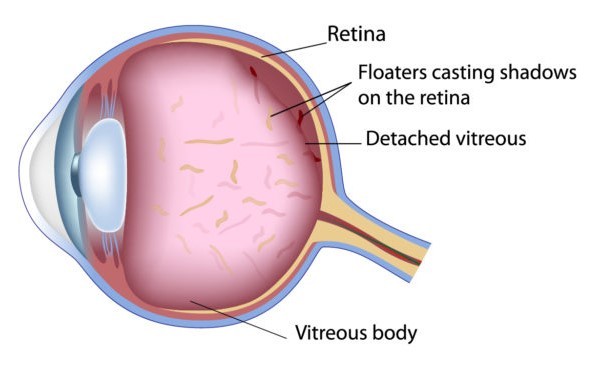
You may sometimes see small specks or clouds moving in your field of vision. They are called floaters. You can often see them when looking at a plain background, like a blank wall or blue sky. Floaters are actually tiny clumps of gel or cells inside the vitreous, the clear jelly-like fluid that fills the inside of your eye.
While these objects look like they are in front of your eye, they are actually floating inside. What you see are the shadows they cast on the retina, the nerve layer at the back of the eye that senses light and allows you to see.
Floaters can have different shapes: little dots, circles, lines, clouds or cobwebs.
What causes floaters?
When people reach middle age, the vitreous gel may start to thicken or shrink, forming clumps or strands inside the eye. The vitreous gel pulls away from retina (the back wall of the eye), causing a posterior vitreous detachment (PVD).
It is a common cause of floaters. 25% of people between age of 50-70 years and 50% people over 70 years can experience this. Posterior vitreous detachment is more common for people who:
- Are short-sighted.
- Have undergone cataract operations.
- Have had YAG laser surgery to the eye.
- Have had inflammation inside the eye.
What can be done about floaters?
Floaters can get in the way of clear vision, which may be quite annoying, especially if you are trying to read. You can try moving your eyes, looking up and then down to move floaters out of the way. While some floaters may remain in your vision, many of them will fade over time and become less bothersome.
Even if you have had some floaters for years, you should have an eye examination immediately if you notice new ones.
It is technically possible to remove floaters by performing an operation to remove the vitreous – a vitrectomy. Unfortunately this operation carries significant risks debilitating or interfering with everyday life. Most eye surgeons are therefore reluctant to recommend this surgery unless there is a threat to sight.
Warning signs
Things you should watch out for:
- A sudden increase in the number of floaters in your vision
- More flashing lights
- A patch of your visual field missing from one eye (a large blind spot)
- Blurred vision in one eye.
If you notice these symptoms then we need to exclude a retinal tear or retinal detachment and you should see your optician or eye doctor as soon as possible.
What happens during first visit to the hospital?
You will be seen by an ophthalmologist, who will examine inside of your eye. To do this, you will most likely need drops to dilate your pupils. This will blur your vision for 4 - 6 hours.
Around 70-90% of people are discharged, if their retina is found to be normal on detailed examination. People who are not discharged after their first visit are reviewed or managed accordingly.
If you have any of the problems. please contact the staff in the Eye Treatment Centre on the following telephone numbers:
| From 9am to 5pm Monday to Friday | 0300 373 5884 |
| From 5pm to 9am and at weekends: | 0300 614 5000 and ask for the eye doctor on call |
Contact us
If you have any queries relating to this information, please contact the Ophthalmology service.
About this information
Service:
Ophthalmology
Reference:
QQ/032
Approval date:
5 August 2024
Review date:
1 July 2027
Click ‘show accessibility tools’ at the bottom of the page

Then click ‘select language’

Alternative formats
You can use the accessibility toolbar at the bottom of your screen to:
-
Change the text size
-
Adjust the font
-
Modify the colour contrast
-
Use the translate function
If you would like this information in another format, such as Braille, audio, or easy read, please speak to a member of staff.
You can also print as well as download as PDF using the “Print this page” button at the end of the page.
Staff will print a copy for you on request
Important note
This page provides general information only. It is developed by clinical staff and is reviewed regularly every 3 years for accuracy. For personal advice about your health, or if you have any concerns, please speak to your doctor.