

Advice after your nerve block for surgery
On this page…
What are Lung Function Tests?
Lung function tests (also called pulmonary function tests) are a group of simple, safe breathing tests that measure how well your lungs work. They are performed by a Respiratory Physiologist in the hospital. The tests may include:
- Spirometry: measures how much air you can breathe out, and how quickly.
- Reversibility testing: spirometry repeated after an inhaled medicine, to see if your airways respond to it.
- Static lung volumes: measures the total amount of air your lungs can hold, sometimes performed in a small glass booth (a body plethysmograph).
- Gas transfer (TLCO): measures how well oxygen passes from your lungs into your blood, using a small, safe breath of test gas.
- FeNO (Fractional exhaled Nitric Oxide): measures a marker of airway inflammation, often used to help diagnose or monitor asthma, by breathing out steadily into a handheld device.
Not everyone has every test, your referring clinician will have requested the specific tests relevant to you.
How Long Will It Take?
Your appointment will usually last between 30 and 60 minutes, depending on which tests you are having and how many attempts are needed to get an accurate result. Please allow extra time in case your appointment overruns slightly.
Risks and Safety
Lung function tests are very safe. Possible side effects, which are usually mild and short-lived, include:
- Feeling briefly lightheaded or dizzy from repeated deep breathing — this passes quickly once you rest.
- Mild discomfort from the mouthpiece or nose clip.
- If you have static lung volumes measured in the glass booth, some people feel briefly uneasy being in an enclosed space — you can see out at all times, and you can ask for the door to be opened immediately if you feel uncomfortable.
- The test gas used for gas transfer (TLCO) is given in a very small, safe amount and has no known side effects.
Tell the physiologist if you feel unwell, very breathless, or unusually unwell at any point — the test can be paused or stopped at any time.
Preparation, Fasting, and Infection Control
No fasting is required for lung function tests — you can generally eat and drink as normal.
- Avoid smoking or vaping for at least 1 hour before your appointment.
- Avoid a heavy meal shortly before your test.
- Avoid strenuous exercise for at least 30 minutes before your test.
- If you use inhalers, you may be asked to withhold certain inhalers before your appointment — follow any specific instructions sent with your appointment letter, as this varies depending on which test you are having.
- Wear loose, comfortable clothing that does not restrict your chest or waist.
- Take your other regular medications as normal unless told otherwise.
To reduce the risk of infection, we use a new, single-use mouthpiece and filter for every patient, and all equipment is cleaned between patients according to Trust infection control procedures.
What Happens During the Test
The Respiratory Physiologist will explain each test before you do it. Generally:
- You will breathe through a mouthpiece, wearing a soft clip on your nose.
- You will be asked to breathe in specific ways — for example, a deep breath in followed by a fast, forceful breath out.
- For static lung volumes, you may sit inside a small, clear glass booth with the door closed.
- For gas transfer (TLCO), you will breathe in a small amount of test gas and hold your breath briefly.
- For FeNO, you will breathe out slowly and steadily into a handheld device for about 10 seconds — this is gentle, not a forceful blow, and usually takes only a minute or two in total.
- Each test is usually repeated a few times to make sure the result is accurate and consistent.
Interpreters and Chaperones
If English is not your first language, we can arrange a hospital interpreter so please let us know when you book your appointment so this can be arranged in advance.
You are welcome to have a chaperone present during your test. We can also provide a member of staff as a chaperone if you would like one, just ask a member of the team on the day, or request this in advance.
After the Test, Results, and Raising Concerns
- You can return to your normal activities immediately.
- A report will be prepared and sent to your referring clinician.
- Your referring clinician or GP will discuss the results with you, usually at your next appointment — the Respiratory Physiology team does not normally discuss results or a diagnosis directly, as this is the role of the clinician who requested the test.
- If you have concerns about your results or diagnosis, including wanting a second opinion, please raise this with your referring clinician or GP in the first instance, they are best placed to discuss this with you and arrange it if appropriate.
-
If you have a concern about your care or experience, please speak to the department involved in the first instance. If you would like further advice or support, you can contact the Trust’s Patient Advice and Liaison Service (PALS). PALS can listen to your concerns and explain the options available, including how to make a formal complaint if you wish.
PALS – Frimley Park Hospital
0300 613 6530
fhft.palsfrimleypark @nhs.net
Contraindications and when the test should be stopped or delayed.
A lung function test (spirometry, Gas transfer & Static volumes) may not be suitable or may need to be postponed if you have any of the following conditions:
- A recent heart attack (usually within the last month).
- Unstable angina (chest pain that is not well controlled).
- A collapsed lung (pneumothorax) that has not been fully resolved.
- Recent chest, abdominal, or eye surgery, where forceful breathing could affect healing.
- Coughing up blood (haemoptysis) of unknown cause.
- A known thoracic, abdominal, or cerebral aneurysm, where forceful exhalation may increase the risk of complications.
- A recent stroke, if your healthcare provider advises against the test.
- An acute respiratory infection (such as influenza, COVID-19, or a chest infection). The test should usually be postponed until you have recovered.
- Severe nausea, vomiting, or any condition that prevents you from performing the breathing manoeuvres safely.
- A tracheostomy (a surgical opening in the neck into the windpipe that holds a breathing tube) may prevent you from performing standard lung function tests accurately. Please inform the healthcare team if you have a tracheostomy.
- Conditions affecting the muscles used for breathing or forming a tight seal around the mouthpiece, such as severe dementia, paralysis of the facial or buccal (cheek) muscles, or other neurological conditions, may make it difficult or impossible to perform the breathing manoeuvres required for lung function testing.
Before your Appointment
Please tell the healthcare professional performing the test if you:
- Have recently been admitted to the hospital (within the last 6 weeks)
- Have had surgery in the past 6 weeks.
- Have a chest infection or fever.
- Are pregnant and have been advised to avoid strenuous breathing manoeuvres.
- Feel too unwell to perform the test.
Your healthcare professional will assess whether it is safe to proceed with the test or whether it should be rescheduled.
Support and Further Information
Asthma + Lung UK — www.
Help Us Improve This Service
We would welcome your feedback on your experience with the Respiratory Physiology service. Please click here scan the QR code below to complete a short survey
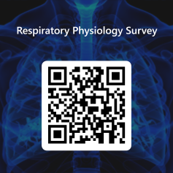
Your answers are anonymous and help us improve the service for future patients.
Contact Details
If you have any questions about your appointment, or if you need to cancel or rearrange, please contact the bookings team on the following numbers depending on where you are having the test:
- Slough Community Diagnostic Centre — 0300 6155796
- Frimley Park Hospital — 0300 6133344
- King Edward VII Hospital, Windsor — 0300 6141096
Our office hours are 08:00 to 16:00, Monday to Friday. If you are unable to attend your appointment, please contact us as soon as possible so we can offer the appointment slot to another patient.
Additional Information
If you have special requirements not covered above (for example, require transport or need mobility assistance), please contact the numbers above ahead of your appointment so we can prepare for your visit.
Contact us
If you have any queries relating to this information, please contact the Respiratory medicine service.
About this information
Service:
Respiratory medicine
Reference:
R/002
Approval date:
2 October 2026
Review date:
1 October 2029
Click ‘show accessibility tools’ at the bottom of the page

Then click ‘select language’

Alternative formats
You can use the accessibility toolbar at the bottom of your screen to:
-
Change the text size
-
Adjust the font
-
Modify the colour contrast
-
Use the translate function
If you would like this information in another format, such as Braille, audio, or easy read, please speak to a member of staff.
You can also print as well as download as PDF using the “Print this page” button at the end of the page.
Staff will print a copy for you on request
Important note
This page provides general information only. It is developed by clinical staff and is reviewed regularly every 3 years for accuracy. For personal advice about your health, or if you have any concerns, please speak to your doctor.