

Advice after your nerve block for surgery
On this page…
Pelvic stability is the ability of the core muscles surrounding the pelvis to support this area in preparation for movement. The muscles involved are the buttock (gluteus), tummy (abdominal), thigh (quads and hamstrings) and the pelvic floor. This develops from an early age as a baby begins to roll and crawl.
Why is pelvic stability important for your child?
Pelvic stability has an impact on stabilising the body for sitting, standing, and walking, enabling balance in weightbearing positions, and allowing coordinated movements of the lower limbs.
What you may see:
A child with pelvic instability may demonstrate difficulties with the following
- Balancing on one foot
- Hopping
- Running, jumping, and skipping
- Negotiating steps and stairs
- Playing sports such as football
- Dancing
General Advice
- Recommended activities include swimming, climbing/soft play, and balance bike/cycling.
- Ensure your child is wearing good quality, supportive footwear when outdoors. We would recommend being barefoot for as much time as possible indoors. There is no evidence to suggest the use of splints or special shoes provide any benefit.
- Encourage your child not to ‘W’ sit and to sit cross legged instead to stretch the hips in the opposite direction. ‘W’ sitting encourages internal rotation at the hips and is often a more comfortable position for children with flexible hips.
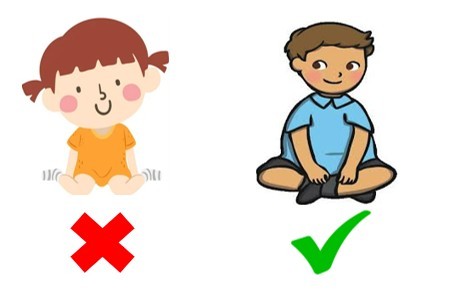
The exercises below are some examples of ways to strengthen the necessary muscles.
1) Bridging
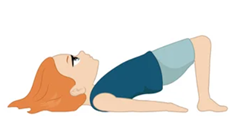
Lie on your back on the floor, knees bent up but feet on the ground. Then, while keeping your shoulders on the ground, lift your bottom up and see how long you can hold for 3-5 seconds. Lower your bottom back to the ground and repeat for at least 2 minutes. *Note, you can roll a ball / toy car underneath the bridge to encourage them to lift and hold*
2) Kneeling
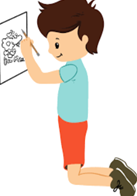
Position yourself in high kneeling while throwing and catching a ball or playing activities such as drawing/crafts at a low table.
3a) Half-Kneeling
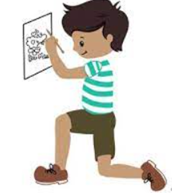
Position yourself in a high kneeling position and move one leg in front of you. In this position throw and catch a ball or play activities such as drawing/crafts/lego at a low table.
3b) Half-Kneel to stand
Stand up from half kneeling position with minimal support. Aim to lead with alternate legs.
4) Crocodile snaps
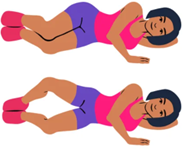
Lying on your side with your knees bent, keep your feet together, and lift the top leg up and snap them down again. Hold for 3-5 seconds. Repeat this for at least 2 minutes on each side.
5) Kicking a ball

Standing on one leg, place a ball under the other foot and pass it to a partner or roll it backwards/forwards and side to side. Repeat this 10 times on each leg.
6) Flamingo balance
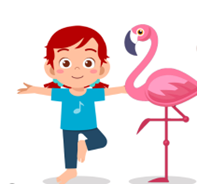
Standing on one leg like a flamingo. Hold your balance for as long as you can. Count how many seconds you can balance for and aim to beat this score.
7) Squatting games
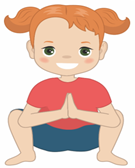
Play games that encourage repetitive standing from a deep squat position (pictured). Eg picking up a ball and throwing it in standing.
8) Bear walking
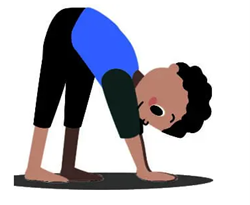
Kneeling on all fours, straighten your arms and legs so your hands and feet are the only parts touching the floor. In this position walk around moving the same arm and leg at a time, keeping your bottom in the air and your head down.
9) Obstacle courses
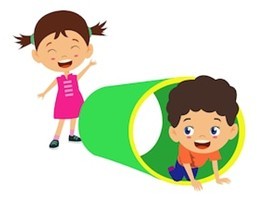
Using play tunnels, sofas, or pillows to create obstacle courses and encourage crawling and climbing activities at home.
Top Tips
- Implement activities daily in short bursts (5-10 minutes)
- Use toys, music, and games to improve engagement
- Do activities together/with siblings to make it more enjoyable
- Consider using sticker charts to encourage routine
- Focus on your child’s abilities and give positive feedback
- Barefoot play helps to improve stability
- HAVE FUN!
Contact us
If you have any queries relating to this information, please contact the Physiotherapy service.
About this information
Service:
Physiotherapy
Reference:
PT/012
Approval date:
1 April 2026
Review date:
1 April 2029
Click ‘show accessibility tools’ at the bottom of the page

Then click ‘select language’

Alternative formats
You can use the accessibility toolbar at the bottom of your screen to:
-
Change the text size
-
Adjust the font
-
Modify the colour contrast
-
Use the translate function
If you would like this information in another format, such as Braille, audio, or easy read, please speak to a member of staff.
You can also print as well as download as PDF using the “Print this page” button at the end of the page.
Staff will print a copy for you on request
Important note
This page provides general information only. It is developed by clinical staff and is reviewed regularly every 3 years for accuracy. For personal advice about your health, or if you have any concerns, please speak to your doctor.