Celebrating Allied Health Professions (AHP) Day


Date published: 19 August 2026
One question that has come up often since we opened our engagement is: ‘Why can’t we build the new hospital on the current site, or use the neighbouring Ministry of Defence (MOD) land’?
It is an important question, and one we know many people care about.
We looked at these locations in detail over many months. Our work, alongside national and independent assessments, showed that rebuilding on the existing site, or on neighbouring land, would not meet the requirements needed to deliver a new hospital.
The detail of our work is published on our website in our engagement booklet and site selection report, but the main reasons are set out below:
There is very little room to build safely
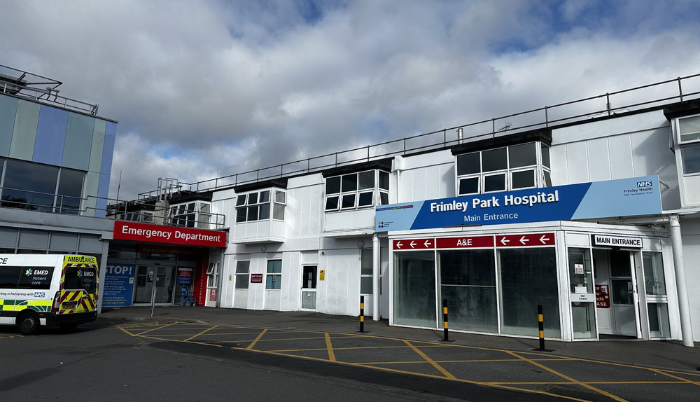
The current site is about 25 acres (over 50 is the optimum standard for a modern 2.0 hospital) and tightly bordered by the M3, nearby homes and Ministry of Defence land, including listed buildings, and a protected garden.
This means the site is constrained, and of course very busy, so we wouldn't be able to carry out major construction works while keeping all hospital services open and safe.
Building around the hospital would be disruptive and risky
Rebuilding on the existing site will require a long, complex, phased construction which would last many years. This means that we would not be able to deliver a new hospital in time to meet the Government's 2035 RAAC deadline.
As RAAC is present in our most clinically sensitive areas, such as theatres and wards, we would need an extensive programme of temporary buildings to ensure we can keep services running.
Independent assessments have indicated that rebuilding on the current site would take significantly longer to deliver and would be much more costly than building a new hospital on an alternative site.
The hospital would need to be much taller
Modern hospitals need taller floors than homes or offices to house medical equipment, ventilation, digital infrastructure and other systems that support safe care.
There simply isn't enough space on the current site for all the services we need. To accommodate them, we would need to build a hospital around 10 storeys tall, roughly the same height as a 14 to 15-storey block of flats. A building of this height would be significantly taller than surrounding development and would have a major visual and planning impact on the area.
Limited ability to plan for the future
Just as importantly, rebuilding on the existing site would limit our ability to support the wider changes needed for future healthcare. The size, layout and constraints of the site would restrict opportunities to redesign services, improve patient flow, reduce delays, and adapt and expand our services over time.
Why not the land next to the current site?
We know the MOD land next to the hospital is another option people have asked about.
The MOD confirmed that no land was available. Even if that position changed, we have identified several significant issues that would need to be resolved before the land could be considered for a new hospital.
Overall, this option could extend the programme by up to four years and increase costs by £500m to £1bn.
Recent local media coverage also included comments from the MoD regarding the site next to Frimley Park Hospital. The MoD have said:
“The MOD and NHS discussed using MOD land adjacent to the existing hospital to support the rebuilding of Frimley Park Hospital, but this was determined to be unfeasible.
"The MOD has an enduring military requirement, and the site remains in active defence use. It also contains both a Grade II listed building and a registered park and garden, which would likely be a significant constraint."
What does this mean?
We recognise that people want to understand why these sites cannot be used, which is why each option has been assessed extensively. Taken together, all the evidence shows that these options would significantly delay the project, increase costs and create additional risks, while failing to deliver the modern hospital that patients and staff need for the future.
Behind all of this are many thousands of patients who deserve to be looked after in a hospital that is safe.