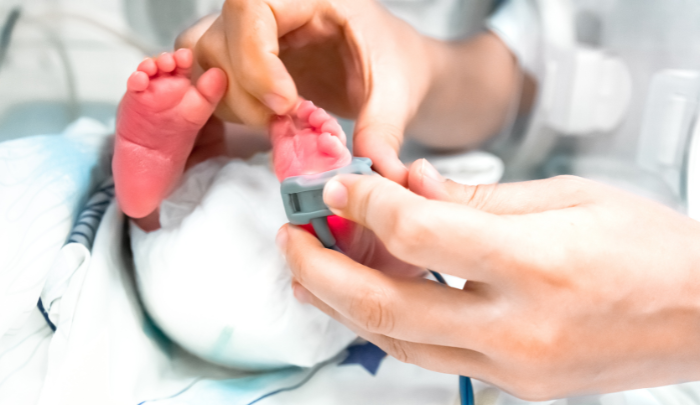
When your baby is born, you will be offered three screening tests. The newborn infant physical examination and the hearing test are usually done in the hospital before you go home.  Or by the community midwife at your home if you have had a home birth.

Screening tests for your baby are your choice, and your midwife can answer any questions you may have.

A full examination of your baby will be completed and a close look at your baby’s eyes, heart, hips, and (for boys) testicles. If a problem is suspected, early checks and treatment can help.

  • When/where: Within 72 hours after birth, usually in hospital before you go home or at home. Repeated at 6–8 weeks at your GP. 
  • Results: Most babies are healthy. If there are any concerns, your baby will have more checks with a specialist.


A check of your baby’s response to gentle clicking sounds using small earbuds. This hearing test helps find permanent hearing loss early. 

  • When/where: Usually in hospital before you go home, or at a later postnatal appointment. 
  • Results: Most babies get a clear response, meaning hearing loss is unlikely. Not all hearing problems can be picked up.  Sometimes, it’s not possible to get a clear response. If that happens, the test will be repeated after about 7 days. 


A small heel prick collects blood to test for 10 rare but serious conditions. Early diagnosis means babies can be monitored and treated sooner. 

  • When/where: At 5 days old, usually at your midwife appointment in the maternity hub. If your baby is still in the hospital, it will be done there.  
  • Results: Most results show no condition suspected meaning it is unlikely your baby has any of the conditions. You should receive a results letter from the child health department.  
    If a result shows condition suspected, this does not mean your baby definitely has the condition, but that more tests are needed. Someone will call you with the results and to discuss what happens next.  
    Speak to your health visitor if you have any concerns.
